The first path is Real Estate Investment Trusts. These are publicly traded securities that hold a basket of real estate assets. You can buy and sell REITs just like stocks. You do not need hundreds of thousands in cash. You do not need to manage tenants. You do not need to handle repairs. You just need a brokerage account. REITs allow you to participate in large commercial real estate projects like shopping centers, office buildings, and apartment complexes with very little money. These projects are usually out of reach for individual investors on their own.
The second path is renting out part of your primary residence. If you have an extra bedroom, a basement apartment, or a backyard cottage, you can rent it out. The rental income can help pay your mortgage or even generate cash flow. Since you live in the same place, managing tenants is relatively convenient. This approach is often called house hacking. It allows you to benefit from lower homeowner interest rates while earning rental income. For a beginner investor, this is a low-risk entry point.
The third path is partnership investing. Buy an investment property together with friends or family members. Each person contributes some of the money, and you own and manage the property together. Partnerships lower the financial barrier for each person, but they require clear written agreements. Who is responsible for what? How are profits distributed? How does someone exit the partnership? A partnership is like a marriage. You should discuss how it will end before you start. What happens if one person wants to sell and the others do not? What happens if someone does not pay for repairs? These questions should be answered before the purchase.
The fourth path is real estate crowdfunding. Online platforms allow you to invest in specific real estate projects with small amounts of money. You become one of many investors in the project and share in the returns proportionally. This path has a low barrier to entry, but it requires careful research into the platform and the reliability of the projects. Not all crowdfunding platforms are the same. Some have strict project screening standards, while others are looser. Understand the platform’s track record and the experience of the project management team before investing.
The fifth path is becoming a private lender. You do not buy the property. Instead, you lend money to people who are buying or renovating properties. You earn interest as your return. This path involves no property management, but it requires you to understand lending risks and to have capital to lend. As a private lender, your return is interest, not property appreciation. Your risk is that the borrower may default. If you choose this path, make sure you have sufficient expertise to evaluate the reliability of both the borrower and the project.
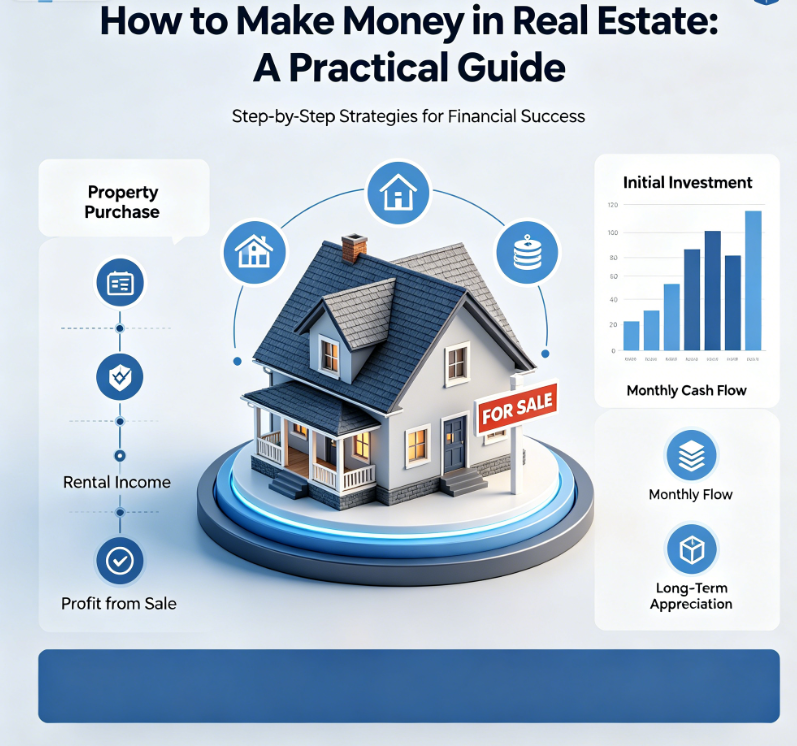
The core of real estate investing is understanding cash flow and appreciation. Cash flow is the profit after subtracting all expenses from rental income. Appreciation is the increase in property value over time. Different investment strategies emphasize different sources of return. The rental strategy focuses on cash flow, aiming for positive net income each month. The fix-and-flip strategy focuses on appreciation, aiming to increase property value through renovations in a short period. The long-term hold strategy combines both, enjoying rental income while waiting for appreciation.
Each investment path has different risks, time commitments, and capital requirements. REITs are liquid, have low barriers to entry, but returns are correlated with the stock market and you cannot control which assets are chosen. Direct property ownership is illiquid and has high barriers to entry, but you have much more control over tenant selection, rent levels, and renovation timing. Partnerships spread risk but also dilute returns and introduce relationship risk. Crowdfunding lowers the barrier but gives you very little control over the project.
Before putting any money in, take time to learn. Read books, attend local real estate investment club meetings, and talk to people who have already succeeded. Real estate investing is not a get-rich-quick scheme. It is an effective tool for long-term wealth building. If you expect to double your money in a few months, you will be disappointed. If you expect steady growth over decades, real estate can be an important part of your financial plan.
Finally, remember that you do not need to start with the biggest project. Start small. Start with an approach you understand. Build experience and confidence along the way. Your first investment does not need to be perfect. It just needs to be your first step into this field. As you gain experience and capital, you can gradually expand the scale of your investments.