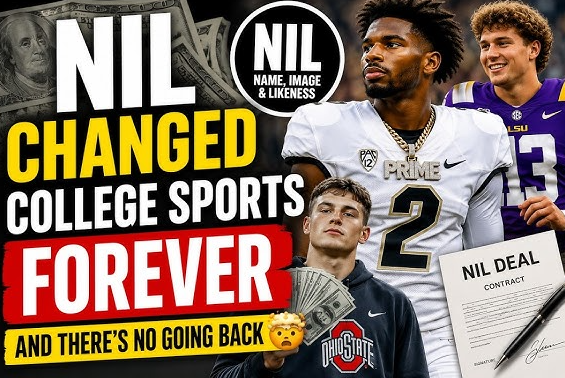
The early winners were predictable. High-profile football players at Alabama, Georgia, and Ohio State landed six-figure deals with car dealerships and local restaurants. Gymnast Olivia Dunne and basketball’s Cavinder twins leveraged social media followings to secure national endorsements with companies like Vuori and Progressive. But the real story is the widening gap. According to a 2024 report by the Knight Commission, the top 1% of NIL earners took home 83% of all collective revenue, while the average football player at a Power Five school earned just $9,800 per year. This disparity has created locker-room tensions. As one anonymous offensive lineman told ESPN: “The quarterback gets a Porsche, and I’m still using meal swipes to feed myself. We’re supposed to be a team.”
The most controversial development has been the rise of “collectives”—booster-funded organizations that pool money specifically to attract recruits. These collectives operate in a legal gray area, often functioning as pay-for-play arrangements that the NCAA expressly forbids. In 2023, the University of Miami’s collective reportedly offered a five-star quarterback recruit a $3.5 million package, including luxury housing and a car. While such offers are technically illegal if conditioned on enrollment, enforcement has been virtually nonexistent. The NCAA has issued only a handful of minor penalties, partly because it fears lawsuits and partly because it lacks subpoena power to investigate.
Proponents argue that NIL is long-overdue justice. “For decades, universities generated billions in media rights while athletes couldn’t even accept a free sandwich,” says Ramogi Huma, executive director of the National College Players Association. “NIL finally recognizes their market value.” They point to positive outcomes: women’s sports, particularly volleyball and gymnastics, have seen unprecedented sponsorship attention. Athletes are building personal brands that will serve them long after their playing days end. Some have even launched charitable foundations with their NIL earnings, funding youth sports programs in their hometowns.
Critics, however, warn of unintended consequences. Recruiting has become an auction, with high school sophomores being courted by agents and “brand managers.” Team cohesion has eroded in some programs where star players command private flights and media entourages while walk-ons sit in the back of the bus. Furthermore, the academic mission of universities has been subordinated; several NIL collectives now require athletes to maintain minimum social media engagement metrics, effectively turning them into content creators first and students second. The NCAA’s attempt to regulate NIL through “uniform national standards” has stalled in Congress, leaving a patchwork of state laws that create competitive imbalances.
Looking forward, the most likely outcome is a complete restructuring of the collegiate model. Some experts predict that top football programs will eventually separate from the NCAA to form a professionalized league with unionized athletes and collective bargaining. Others foresee NIL rights being folded into broader revenue-sharing agreements that give every athlete a baseline compensation. What is certain is that the pre-2021 era is gone forever. The student-athlete, as an ideal, was always a fiction. NIL simply tore off the mask. Whether that liberation leads to sustainability or chaos depends on whether universities, legislators, and the athletes themselves can craft a system that balances freedom with fairness. For now, the wild west continues.