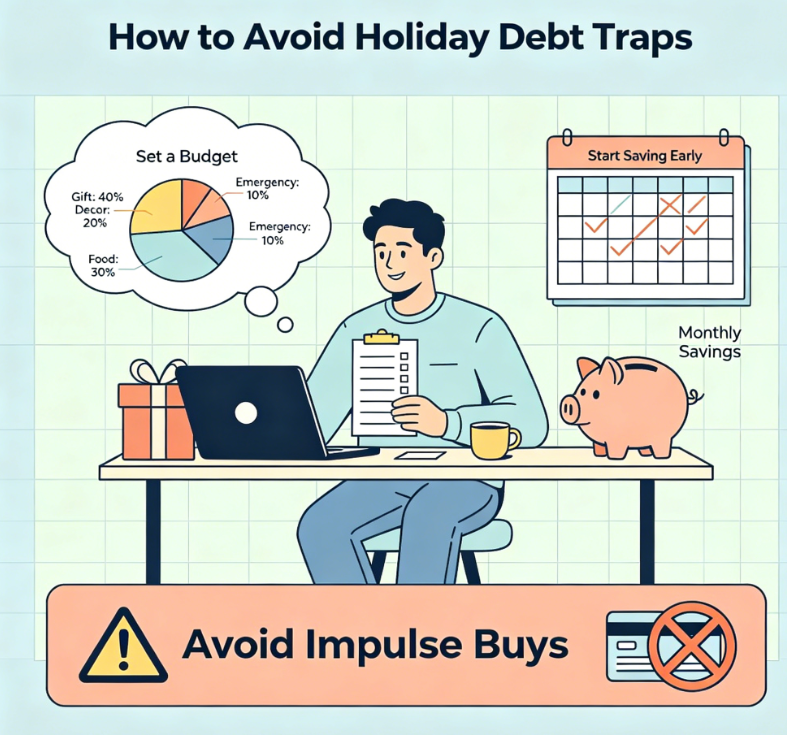
Setting a budget before the holiday season begins is the most important step. A budget does not restrict your joy. It ensures that your joy does not turn into pain in January. Decide how much you want to spend in total on gifts, decorations, parties, and travel. Then break it down into categories. Once you have set your budget, stick to it. The magic of a budget is that it makes you choose consciously rather than overspending unconsciously. When you know you only have a certain amount of money, you become more careful about how you spend it.
Shopping early helps you avoid rushed decisions. The closer it gets to the holidays, the greater the shopping pressure and the easier it is to make impulsive purchases. Merchants know this, so they ramp up their marketing in the final weeks. Starting your planning weeks or even months in advance allows you to compare prices, wait for discounts, and have enough time to think about whether each gift is truly appropriate. Rushed decisions are often wrong decisions. Early planning gives you room to think.
Using cash or a debit card instead of a credit card makes a difference. Credit cards make you less aware of money leaving your pocket. A quick swipe, and the item is yours. This painless payment is part of the credit card design. Cash is different. When you see your wallet getting thinner, you become more aware of how much you are spending. If you must use a credit card, make sure you have already set aside in your budget the funds to pay it off in full. Do not assume you can pay it off slowly over the next few months. The money for the next few months is already allocated to other things.
Do not buy things you do not need just because they are on sale. Fifty percent off sounds tempting, but if you do not need the item, the only true saving is one hundred percent off. Merchants use discounts to tempt you into buying things you had not planned to buy. Each time you see a discounted item, ask yourself: would I buy this if there were no discount? If the answer is no, do not buy it. Remember, you are not saving money. You are spending money on something you had not intended to buy.
Set a gift budget for each person instead of trying to buy the perfect gift for everyone. The perfect gift is a myth. Most people do not remember what you gave them last year. They care about whether you thought of them, not how much you spent. For large families or groups of colleagues, consider group gifts or gift exchanges where each person only needs to prepare one gift instead of many. This not only saves money but also reduces stress.
When January arrives, pay off your holiday debt as quickly as possible. Do not pay only the minimum. The minimum payment is designed to keep you in debt forever. If you cannot pay the full amount, create a repayment plan with a fixed monthly payment until the debt is cleared. At the same time, pause all non-essential spending until the debt is gone. This means eating out less in January and delaying unnecessary shopping, focusing on restoring your financial balance. A month or two of frugality is far better than a full year of debt.
After the holidays end, start saving for the next holiday season. Put a small amount each month into a dedicated holiday savings account. By the time the next holiday season arrives, you will have built up cash and will not need to rely on credit cards. This is the key to breaking the holiday debt cycle. If you start from scratch each year with no reserves, you will return to credit cards again and again. If you start saving in January for December, you have eleven months to accumulate. Saving a small amount each month is far easier than coming up with a large amount all at once in December.
Remember, the holidays are about people and relationships, not about gifts. This is a simple but easily forgotten truth. Your loved ones would rather see you financially healthy than receive an expensive gift that puts you in debt. A stress-free you is more valuable than any gift. Consider non-material gifts. A handwritten letter, time spent together, help with a task. These gifts cost no money, but they may be more precious to the recipient than anything bought in a store.
If you are already in holiday debt, do not blame yourself. This is not a moral failure. It is a systemic problem that requires a systemic solution. Make a repayment plan, start saving for next year now, then forgive yourself and move forward. Everyone makes mistakes. What matters is what you learn from them and how you change your future behavior.