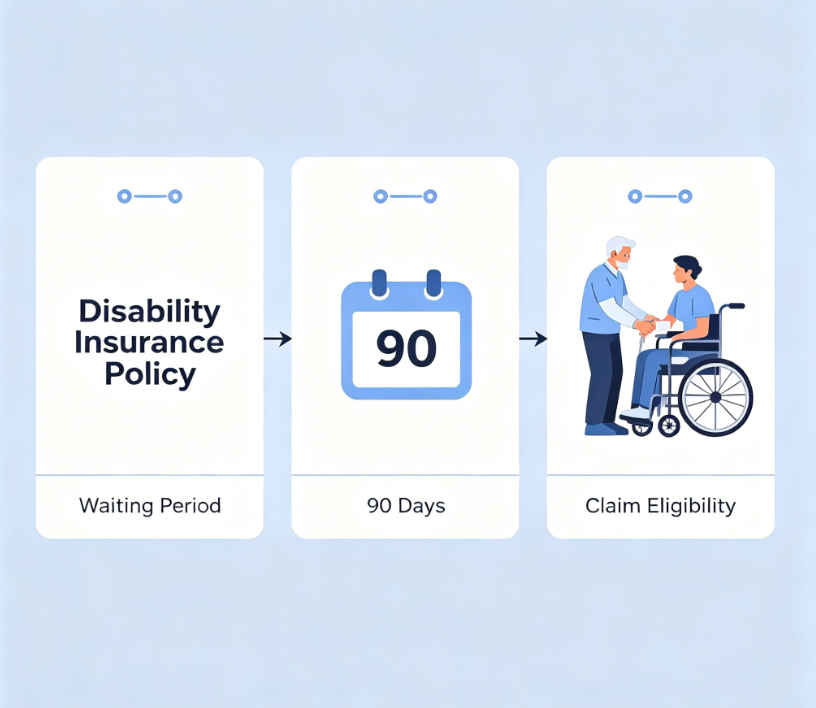
The waiting period exists for good reason. Insurance companies need time to confirm that your disability is genuine and ongoing. At the same time, the waiting period keeps the cost of insurance products within a reasonable range. Without waiting periods, insurers would have to pay for short-term illnesses, and premiums would be unaffordable. The waiting period is a risk management tool. It ensures that benefits are paid only for truly serious, long-term disabilities, not for brief illnesses or minor injuries.
Common waiting period options range from thirty days to three hundred sixty-five days. The length of the waiting period you choose directly affects two things: the premium you pay each year and how much you would need to cover yourself if you became disabled. A shorter waiting period provides faster protection but costs more. A longer waiting period costs less but requires you to have sufficient resources to cover expenses during the waiting period. This is a direct trade-off.
The relationship between waiting period and premium is inverse. The shorter the waiting period you choose, the sooner the insurance company starts paying, so the higher the premium. The longer the waiting period you choose, the later the insurance company begins paying, so the lower the premium. Some people choose a longer waiting period to save on premiums, but this requires you to have enough savings to cover your expenses during the waiting period. If you do not have adequate savings, choosing too long a waiting period could leave you in financial difficulty after a disability. Even if you have some savings, if the waiting period is too long, you might exhaust them.
When choosing a waiting period, you need to assess your financial buffer capacity. If your job provides paid sick leave, you can count those sick days as part of your waiting period. For example, if you have thirty days of paid sick leave, you might choose a sixty-day waiting period. The first thirty days are covered by sick leave. The next thirty days are covered by your savings. If your savings are ample, you can choose a longer waiting period. If your savings are minimal, or if your job does not provide paid sick leave, choosing a shorter waiting period is safer. Ask yourself a question: if I could not work tomorrow, how long could I manage without insurance benefits? The answer to that question should guide your choice.
Occupational risk is also a factor. Office workers have a relatively low risk of disability and can choose a slightly longer waiting period. You are less likely to suffer a severe, long-term disabling injury from routine office work. People in physical labor or high-risk occupations have a higher disability risk and may need a shorter waiting period. A construction worker and an accountant face very different risks. Your occupation should influence your choice.
The waiting period applies separately to each disability event. If you are disabled this year due to one condition, receive benefits, recover and return to work, and then become disabled next year due to a different condition, you must serve another waiting period before receiving new benefits. This is not a one-time thing. It is not deducted once per year from each policy. Each time you are unable to work for a new reason, you go through the waiting period again. This is an important detail that many people overlook or forget.
When purchasing disability insurance, read the definition of the waiting period carefully. Some policies count the waiting period from the first day you are completely unable to work. Some policies require you to exhaust all your paid sick leave before the waiting period begins. Some policies have a very strict definition of “total disability.” You could be partially disabled for a long time without qualifying for benefits. For example, you may be unable to perform the core duties of your occupation but still able to do other work. Different policies treat this situation differently. Understand this before you buy.
How do you choose the right waiting period for you? Start by assessing your financial situation. How much emergency savings do you have? How much paid sick leave do you have? If your savings are substantial, you can afford a longer waiting period and save on premiums. If your savings are limited, a shorter waiting period is safer. Second, assess your occupational risk. How dangerous is your job? How likely are you to be injured? High-risk occupations call for shorter waiting periods. Third, compare the premium differences across waiting periods. Calculate the annual premium savings against the potential risk you are taking. Sometimes paying a slightly higher premium for a shorter waiting period is well worth it.
The waiting period is not a trap set by insurance companies. It is a necessary mechanism for controlling costs and risks in insurance design. Understand how it works. Make your choice based on your financial situation and occupational risk. You will find the right balance for yourself. Do not look only at the premium. Do not look only at the waiting period. Consider your overall financial situation, your risk exposure, and how much time you would need before receiving benefits. With careful evaluation, you can choose a waiting period that protects you without breaking your