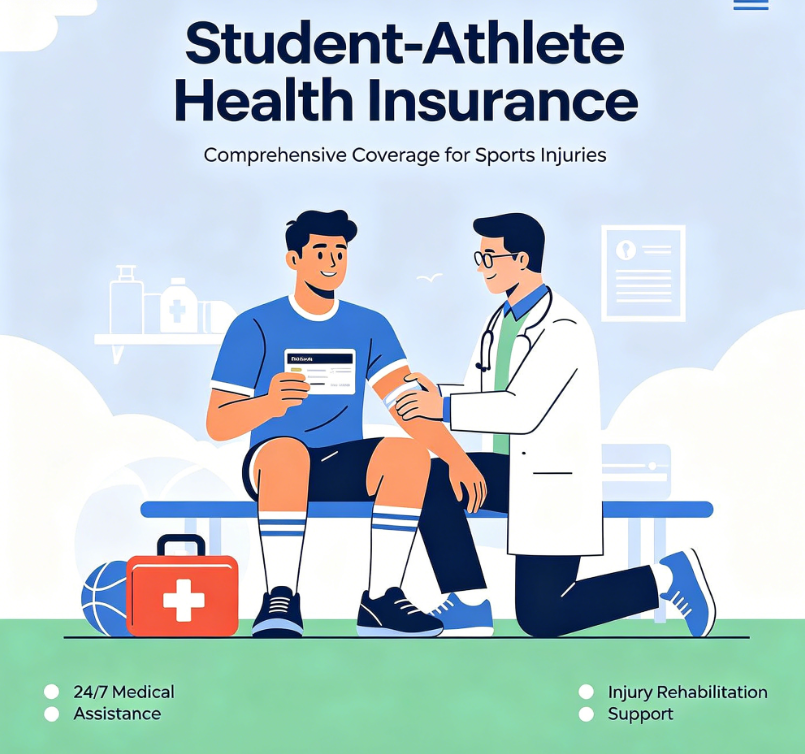
Who needs this insurance? College athletes, whether competing in national athletic associations or intercollegiate club sports, need to consider this insurance if they represent their school in organized sports. High school athletes, especially those in contact sports, may be required by some schools to have additional insurance. Young athletes attending camps or tryouts face injury risks during these short-term activities as well. International student athletes often find that their home country insurance is not valid in the US. Any organized sport carries risk, and insurance is the tool to manage that risk.
Student athlete medical insurance covers injuries during training and competition, including fractures, ligament tears, concussions, and joint injuries. It covers sports-related rehabilitation, such as physical therapy, athletic training, and recovery sessions. Regular insurance may limit the number of rehab visits, while athlete policies are usually more generous. It also covers necessary medical equipment like crutches, braces, and protective gear, as well as emergency and hospital care. If an athlete needs emergency treatment at the competition site, those costs are typically covered as well.
What is not covered includes routine physicals unless sports-related, pre-existing conditions, non-sports injuries, and dental or vision care unless caused by sports. Determining what is sports-related and what is not sometimes requires professional medical judgment. For example, an ankle sprain during a game is sports-related, but a slip and fall in a dormitory might not be.
Compared to regular health insurance, the main differences of student athlete insurance are higher coverage limits for sports-related injuries, more comprehensive rehabilitation coverage, different deductible and copay structures, and broader coverage during away competitions. Regular insurance might exclude certain sports as high-risk activities. Specialized athlete policies do not. If you participate in contact sports such as football, hockey, or wrestling, specialized insurance is particularly important.
Most colleges require that athletes have insurance. The school typically offers its own plan, with costs included in tuition or athletic fees. The advantages of school plans are convenience, compliance with school requirements, and integration with campus health and athletic training staff. The disadvantages are that they may only cover during the academic term, not during breaks or after graduation, and coverage limits may be limited. Many families choose to combine both: the school plan as a base and a private plan as a supplement. This way, the athlete is protected whether during the school year or during breaks.
Before purchasing insurance, you need to know your school’s minimum requirements. Each school is different. Some require specific coverage limits. Some require specific deductible amounts. Know the risk level of your sport. Higher-risk sports need more comprehensive coverage. Know if you have other insurance. If you do, will the new policy be primary or secondary? Primary insurance pays first. Secondary insurance pays after primary insurance is exhausted. Understanding these layers is important.
Knowing the claims process is also important. After an injury, you may need to notify the insurance company within a certain time frame. Keep all medical records and receipts. Some insurance plans require you to use in-network providers, or your reimbursement rate will be lower. Knowing these rules in advance can prevent unexpected out-of-pocket costs. For athletes who frequently travel to away competitions, knowing the insurance coverage outside your home area is especially important.
Student athlete medical insurance is not optional. For most athletes, it is required, either by the school or by actual risk. A single serious sports injury can generate tens of thousands or even hundreds of thousands in medical bills. Without insurance, these costs may fall on the family. Know your school’s requirements. Know the limitations of your family insurance. Then choose the plan that fits your sport and your situation. Investing in your health is investing in your athletic career and your education.