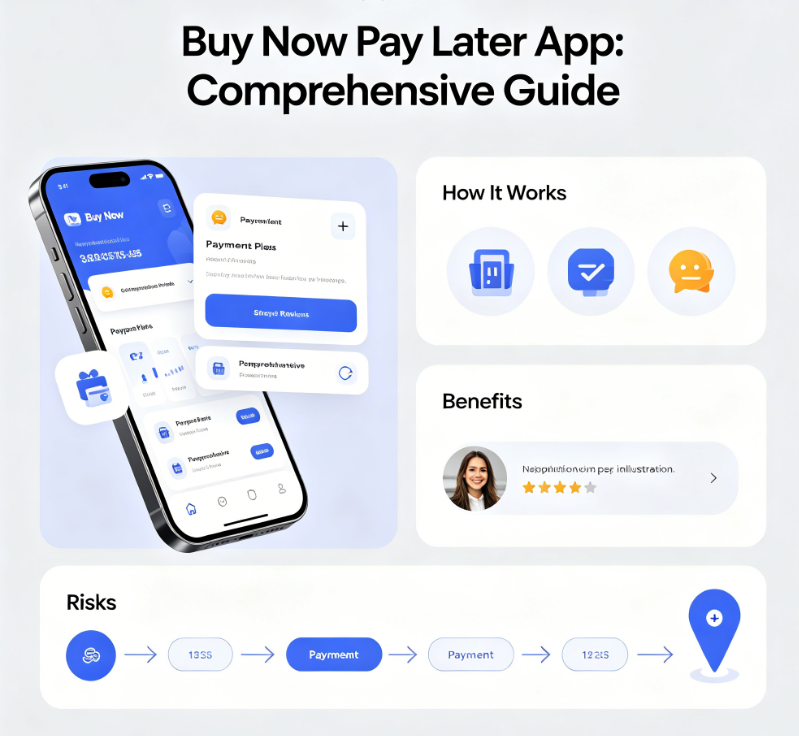
How does BNPL work? You download a BNPL app. You shop at a merchant that supports the app. At checkout, you select the app as your payment method. You pay the first installment, typically a quarter of the total price. You take the item home. Then every two weeks, you pay another quarter of the remaining balance until it is paid off. As long as you pay on time, there is no interest. This structure is simple and transparent, easier to understand than the complex interest calculations of credit cards.
How do the apps make money? If consumers pay no interest, how do BNPL apps make money? There are three main sources. First, they charge merchants. Every time you use a BNPL app to shop, the merchant pays the app a transaction fee. Merchants are willing to pay this because studies show that offering BNPL options makes consumers buy more. Second, late fees. If you miss a payment, the app charges a late fee. The amount is not large, but if you are late often, the fees add up. Third, some apps offer longer-term installment plans. These plans charge interest. These revenue sources allow the apps to offer short-term, interest-free loans as a loss leader.
The benefits of using BNPL include not needing the full amount upfront, which is helpful for higher-priced items. Most apps do not check your credit score, at least most of the time. Approval is fast, within minutes. If you pay on time, some apps report your payment history to credit bureaus, helping you build credit. For people with no credit history or those who want to manage cash flow, this is a useful tool.
The risks of using BNPL include buying what you cannot afford. Because each installment payment is small, you might use multiple apps to buy multiple items. Your total monthly payment could be much more than you realize. Another risk is late fees. If you forget a payment, even by one day, you are charged. Returns are more complicated. With a credit card, the refund goes directly back to your account. With BNPL, you need to coordinate with both the merchant and the app company. The refund can take weeks. If you use BNPL repeatedly, you may lose track of your total debt.
Differences between BNPL and credit cards include that credit cards allow you to roll over debt. You can pay only the minimum and leave the balance for next month, but interest accrues. BNPL forces you to pay off within weeks, or you are charged. Credit cards have stricter credit checks. BNPL typically does not check credit. Credit cards offer consumer protections. BNPL offers weaker protections. Credit cards are better for large, long-term financing needs. BNPL is better for short-term, small convenience needs.
How to use BNPL safely? Use only one plan at a time. Do not use three or four apps for different items at the same time. Set payment reminders. Mark each due date on your calendar, or turn on automatic notifications from the app. Test with a small amount first. If you have never used a particular app, buy one cheap item to learn how they charge, how they notify you, and how fast customer service responds. Read the terms. Find answers to two questions: how much is the late fee, and what happens if I return the item? Do not use it for things that lose value quickly. BNPL does not make a bad purchase decision better. It just makes the payment feel easier.
Who should use BNPL? If you have stable income, can pay off within a few weeks, and were going to buy the item anyway, BNPL is a reasonable payment method. It lets you keep your cash while getting the item immediately. Who should not use BNPL? People with unstable income. People who already have multiple installment plans active. People who easily forget due dates. People who use BNPL to buy things they would not otherwise buy.
BNPL changes how you pay, not how much you pay. The total price of an item remains the same. Installments do not make it cheaper. If you find yourself using BNPL because you cannot afford the full amount now, that is a warning sign. You probably should not buy that item. Save first, then buy. Do not buy now and hope to pay later. BNPL is a tool. A tool is neither good nor bad. It depends on how you use it. Used correctly, it helps you manage cash flow. Used incorrectly, it loads you with more debt than you realize.