The best and most common method is to sign a completely new will. The new will should contain a clear clause stating that it revokes all previous wills and codicils. When signing the new will, you must follow the legal requirements of your region, which typically require two disinterested witnesses. The witnesses cannot be beneficiaries of your will. After signing, destroy all copies of the old will.
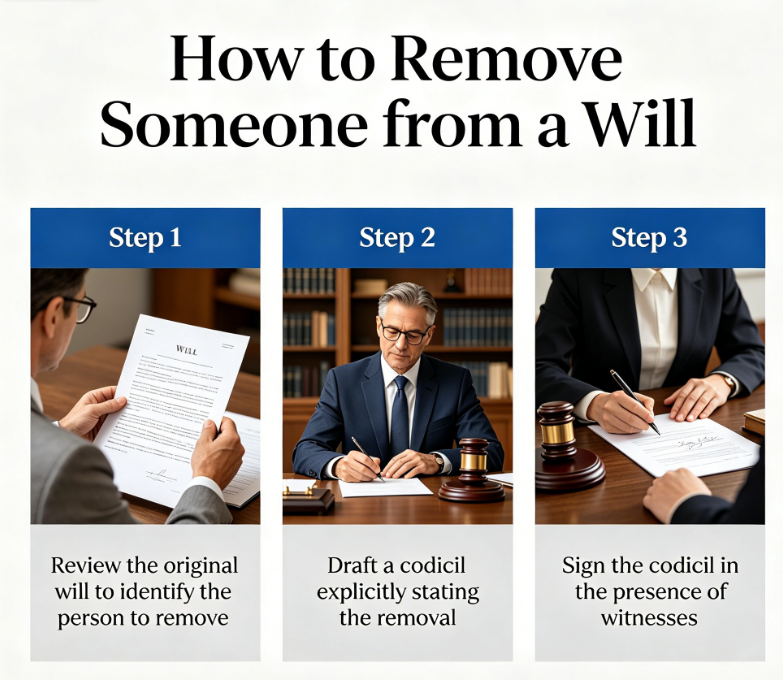
Another method is to sign a codicil. A codicil is a formal amendment to an existing will. It must be signed with the same formalities as the original will. This method is suitable for small changes. But if your changes are more extensive, or if your will is already old, creating a new will is the better choice.
In most regions, handwritten changes on the original will are invalid. You may think that since it is your document, you can write whatever you want on it. But the law requires wills to meet specific formalities. Handwritten changes are generally not recognized. The court will ignore your changes and follow the original will.
After removing a beneficiary, you need to consider how the removed share should be redistributed. If you do not state this clearly, the law may apply intestacy rules to that portion of the property. It is best to clearly state in your new will where the removed share should go.
If you are removing a spouse or child, be aware that some regions have forced heirship rules. In these regions, you cannot completely disinherit a spouse or minor child. Even if your will says they get nothing, the law may still give them a share.
Removing a beneficiary may lead to legal challenges. The removed person may claim that you lacked mental capacity when signing the new will or that you were unduly influenced. To reduce the risk of a challenge, you may consider having a doctor provide a letter of capacity when you sign the new will, or having your witnesses sign an affidavit.
After updating your will, tell your executor that a new will exists and where it is stored. You do not need to tell them the contents, but you need to ensure they can find the document after your death.
Your will is the expression of your wishes. When your wishes change, your will should change too. Do not postpone updating it because it seems like a hassle. A few minutes of correct action now can prevent family disputes and pain in the future.