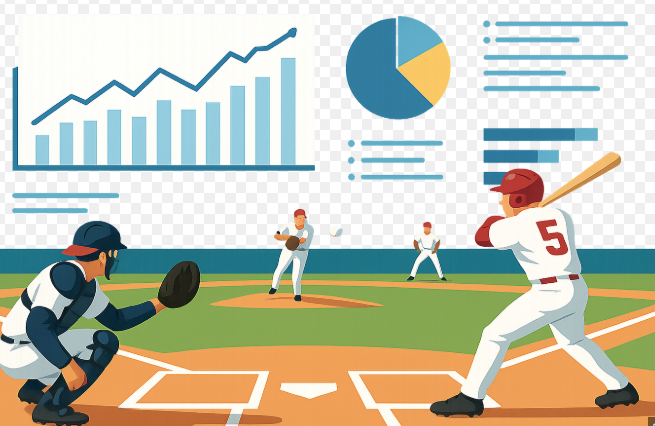
The transformation is most visible in hitting. The modern swing has been biomechanically optimized; batters now aim for a launch angle between 15 and 30 degrees, as that maximizes the probability of a home run while minimizing ground balls and pop-ups. The “three true outcomes”—home runs, walks, and strikeouts—now account for 45% of all plate appearances, up from 29% in 2002. Strikeouts have reached record levels; the 2024 season saw an average of 8.9 strikeouts per nine innings, compared to 6.2 in 2000. While home runs have increased correspondingly (5,800 in 2023 vs. 4,500 in 2000), many fans decry the lack of contact hitting, stolen bases, and situational play. Traditionalists argue that baseball has become a “three-true-outcome” slugfest, sacrificing nuance for analytics.
Pitching analytics have evolved in parallel. The use of spin rate to generate “movement” on fastballs has become the primary driver of effectiveness. Pitchers like Jacob deGrom and Gerrit Cole have average spin rates above 2,600 rpm, generating swing-and-miss rates of 35% or higher. “Pitch design” labs, where teams use high-speed cameras and Rapsodo technology to refine grip and release, are now standard in every organization. The emphasis on velocity has also increased; the average fastball speed in 2024 is 94.2 mph, compared to 89.1 mph in 2002, but this has led to a corresponding rise in elbow injuries, with Tommy John surgeries increasing by 40% since 2019. Teams are now experimenting with pitch clocks and innings limits to manage workload, but the injury epidemic remains unresolved.
Defensive shifts represent the third pillar of analytics. Infielders now position themselves based on a batter’s spray chart, shifting as far as 30 degrees from traditional alignment. The 2023 rule banning extreme shifts (requiring two infielders on each side of second base) was a direct response to the analytics-driven defensive alignments that frustrated hitters and reduced batting averages. The shift ban has marginally increased batting averages (from .245 to .251 in the first year), but teams have adapted by using data to position within the new constraints. The broader lesson is that rule changes can only partly counteract the computational sophistication of modern baseball operations.
The front-office revolution has democratized access to data. Every MLB team now uses Statcast, MLB’s proprietary tracking system, which captures player movements, ball trajectory, and umpire calls in real time. Teams also leverage external data sources, including Pitch f/x and TrackMan, to create proprietary models. The data pipeline extends to amateur scouting; prospects are evaluated on exit velocity and fielding independent pitching (FIP) metrics as much as batting average. This has compressed the talent gap; small-market teams like the Tampa Bay Rays have consistently outperformed payroll expectations by exploiting inefficiencies. The Rays’ 2023 playoff run, with a payroll 60% lower than the New York Yankees, was a testament to their analytical edge.
Critics, however, argue that analytics have made baseball less entertaining. Games are longer (until the 2023 pitch clock, which reduced average game time from 3:05 to 2:40), and the strategic decisions—when to shift, when to pull a pitcher—are increasingly automated. Some managers are accused of consulting spreadsheets instead of instincts. The counterpoint is that baseball has always been a game of numbers; analytics simply provide more precise numbers. As the veteran manager Terry Francona put it: “We used to rely on gut feelings, but gut feelings are just subconscious pattern recognition. Data just formalizes it.”
The next frontier is machine learning. Teams now use AI to predict player aging curves, optimize lineups based on opposing pitchers, and even simulate game scenarios for in-game decisions. The 2024 introduction of “automated ball-strike” (ABS) in the minor leagues—essentially a robo-umpire—suggests that even human judgment may become optional. The data revolution is not over; it is accelerating. Baseball’s future will be even more quantified, and while purists may mourn the loss of intuition, the numbers tell a compelling story. In the end, baseball is still a sport of failure and success, of struggle and triumph. The data just helps explain why.