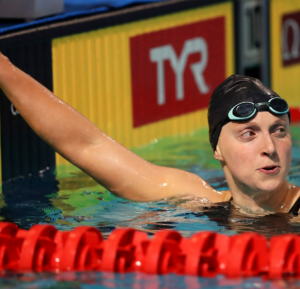
The most visible progress is in participation and scholarships. The NCAA now sponsors 90 women’s championships, compared to just 15 in 1972. Women receive 48% of all athletic scholarships, nearly equalling their male counterparts, and the average budget for women’s teams has increased sixfold in inflation-adjusted terms. The US Women’s National Soccer Team’s victory in the 2019 World Cup, followed by their successful equal-pay fight in 2022, was emblematic of a generation that not only expects participation but also demands compensation and respect. The 2024 Paris Olympics saw Team USA field a delegation that was 54% female, winning more gold medals in women’s events than in men’s.
However, significant disparities remain, particularly in funding and media coverage. A 2023 study by the Women’s Sports Foundation found that despite Title IX, NCAA Division I schools spend, on average, $12.2 million on men’s sports and $8.9 million on women’s—a gap of $3.3 million. This gap is even wider in “revenue sports” like football and men’s basketball, which generate the bulk of athletic department income. The argument that men’s sports fund women’s sports is frequently cited, but critics note that the revenue allocation is not proportional; football and men’s basketball receive disproportionate shares of media rights, while women’s programmes are often underfunded relative to their participation numbers. Moreover, coaching disparities are stark; the percentage of female head coaches in women’s sports has dropped from 90% in 1972 to just 41% in 2024, a decline attributed to pay gaps and marginalization.
Media coverage remains another battleground. A 2024 report from the USC Annenberg School found that women’s sports received only 15% of total sports media coverage on ESPN and major networks, despite constituting 30% of all sports participation. The 2024 NCAA Women’s Basketball Tournament, which featured record viewership (12.3 million for the final), demonstrated the pent-up demand, yet the average broadcast deal for women’s sports remains far below men’s equivalent. The recent $2.5 billion media deal for the WNBA is a positive step, but it still pales compared to the NBA’s $76 billion agreement. The under-coverage perpetuates a cycle of lower sponsorship, lower salaries, and lower public perception.
The “compliance” approach to Title IX has also been criticized. The three-prong test—which allows schools to demonstrate compliance by either proportionality to enrollment, history of expansion, or accommodation of interest—has led to institutional manoeuvring. Some schools have eliminated men’s sports (like wrestling, swimming, and gymnastics) to achieve proportionality, rather than funding new women’s programmes. This “zero-sum” approach has created resentment among male athletes and coaches, and the elimination of opportunities has arguably undermined the spirit of Title IX. Advocates argue for “proportionality plus”—ensuring that both men and women have robust programmes, rather than cutting men’s to meet quotas.
The next frontier is the intersection of Title IX with transgender athlete participation. The Department of Education’s 2024 interpretation of the law stated that Title IX’s protections do not extend to gender identity in athletic eligibility, a policy that remains contested in courts and legislatures. The debate over fairness in competition has dominated public discourse, sometimes overshadowing the law’s foundational purpose of prohibiting sex-based discrimination. The Biden administration’s proposed rules, which would have allowed some restrictions, have been delayed, leaving schools in a state of policy limbo. The outcome will shape how Title IX is implemented for the next generation.
Ultimately, Title IX’s legacy is that it changed societal expectations. Young girls now grow up with the belief that sports are for them—a psychological shift that is perhaps the law’s most enduring achievement. Yet the law’s potential is still unrealized. Equal funding, equitable coaching, and fair media coverage remain distant goals. The 50th anniversary was a moment of celebration, but also of reflection. As one former college athlete and current Title IX activist put it: “We’ve won the right to play. Now we have to win the right to be taken seriously.” That battle is far from over.