The injury data is alarming. A 2023 study in The American Journal of Sports Medicine tracked 1,500 young athletes (ages 8–18) and found that early specialization—defined as quitting all other sports by age 12—was associated with a 2.5 times higher risk of serious overuse injuries, including ACL tears, stress fractures, and tendinopathy. The mechanism is straightforward: repetitive, high-intensity movements without adequate rest lead to tissue fatigue and microtrauma. The study also found that female athletes had a higher risk due to anatomical differences, though the disparity narrows when training loads are equated. The cost is not just medical; injuries often lead to lost playing time, emotional distress, and, in extreme cases, the end of athletic careers.
Burnout is the psychological counterpart. The pressure to perform, combined with year-round competition, leads to what sports psychologists call “adolescent athlete burnout syndrome.” Symptoms include emotional exhaustion, depersonalization from the sport, and a reduced sense of accomplishment. A 2024 survey by the National Athletic Trainers’ Association found that 34% of high-school athletes who specialised by age 13 reported that they would not play their sport if they could choose again, compared to just 12% of multi-sport athletes. The dropout rate from youth sports has also risen, with nearly 70% of children quitting organised sports by age 13, often citing “not fun” and “too much pressure” as reasons. Specialisation, ironically, may be driving the very attrition it aims to prevent.
The counterargument is that elite pathways increasingly demand specialisation. In gymnastics, figure skating, and tennis, athletes often peak in their late teens or early 20s, requiring thousands of hours of early training. The “10,000-hour rule” has been distorted into a mandate for single-sport focus. Moreover, the economics of youth sports—private coaching, travel teams, and showcase tournaments—have created an industry worth $19 billion annually, with a vested interest in promoting specialisation. Parents, often motivated by scholarship hopes or professional dreams, rationalise the trade-off by pointing to successful examples like Tiger Woods, who was coached in golf from age 2, or Serena Williams, who began tennis at 4. These exceptional cases, however, are statistical outliers.
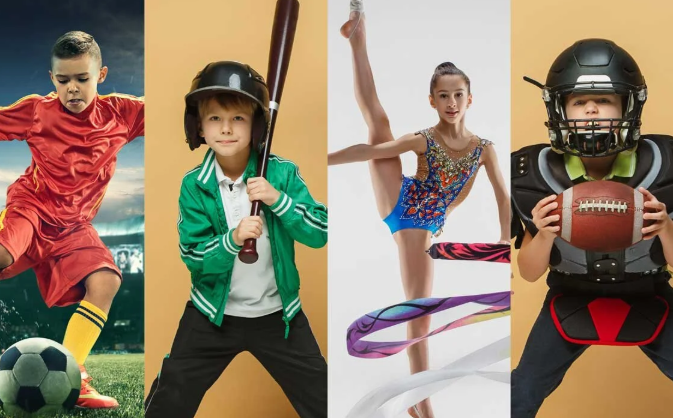
The concept of “periodization” offers a middle ground. This approach advocates for rotating through sports seasonally—basketball in winter, track in spring, swimming in summer—to develop diverse motor skills and reduce monotony. The evidence is compelling: a 2022 study in the Journal of Sports Sciences found that multi-sport athletes aged 14–18 had a 30% lower injury rate and a 22% higher long-term retention rate than their specialised peers. Additionally, multi-sport athletes often transfer skills (e.g., the hand-eye coordination of hockey to lacrosse), which enhances cognitive and physical adaptability. The Norwegian model, in which young athletes are encouraged to play multiple sports until age 16, has produced world-class performers in skiing, handball, and athletics while maintaining a lower dropout rate than many other European countries.
The role of parents and coaches is pivotal. Pushy parents who enrol children in year-round elite programmes often misread the signals; children who are “good” at a sport at age 10 may not be the same at age 16, as physical maturation and psychological development vary widely. The “relative age effect” further complicates the issue; children born earlier in the age cut-off often dominate early, leading to over-selection and early specialisation, but these advantages often dissipate by adolescence. Programmes that recruit based on “potential” rather than current performance are gaining traction, but implementing such a shift requires a cultural change in how talent is assessed.
The future of youth sports likely lies in a balanced model: specialisation starting at age 14, but with mandatory rest periods and low-intensity “off-season” activities. The concept of “deliberate play”—unstructured, spontaneous sports participation—has been shown to develop creativity and enjoyment, countering the regimented nature of travel teams. The United States Olympic and Paralympic Committee has endorsed a “sports sampling” approach, encouraging parents to delay specialisation and prioritise enjoyment. The evidence is clear: the pathway to elite performance is not a straight line but a winding road, and those who traverse it with variety and joy may not only perform better but also enjoy a longer, healthier relationship with sport. The real question is not whether to specialise, but when.