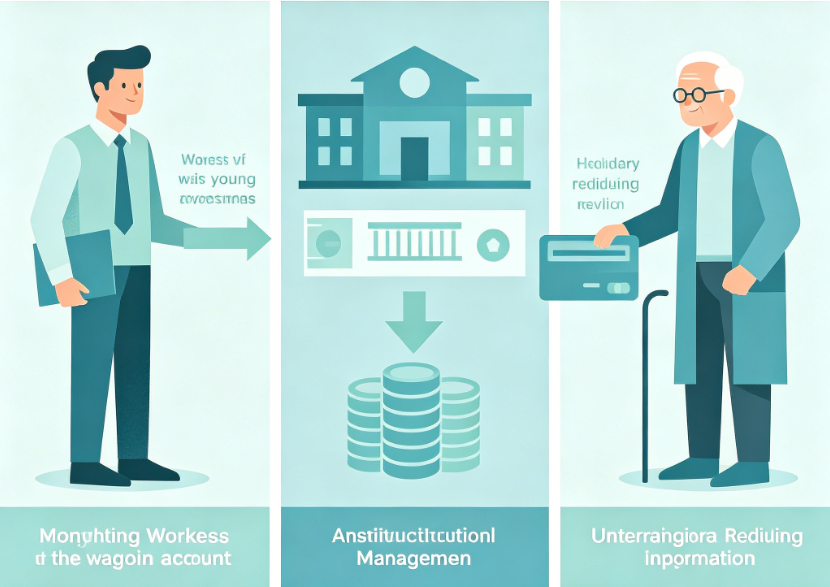
The essence of an annuity is hedging against longevity risk. People are living longer. This is good news, but it creates a financial problem. If you live to one hundred, will your savings be enough? Annuities are designed to solve this problem. They transfer the risk of living too long, which an individual cannot predict, to an insurance company. The insurance company has many customers and can use statistics to predict average lifespans, allowing it to offer lifetime income guarantees.
An annuity has two main phases. The first is the accumulation phase. During this phase, you put money into your annuity account. The money grows within the account, typically on a tax-deferred basis. You can contribute a large lump sum or make contributions over time. The second phase is the payout phase. During this phase, you begin receiving regular income from your annuity account. You can choose monthly, quarterly, or annual payments. Once you enter the payout phase, you usually cannot go back.
A fixed annuity is one type. It guarantees a minimum interest rate. Regardless of market performance, the insurance company promises that your principal will not be lost and that it will grow at an agreed rate. When you start taking income, the payment amount is fixed. The advantage of a fixed annuity is certainty and safety. The disadvantage is that returns are typically low, and fixed income can be eroded by inflation.
A variable annuity is another type. It allows you to allocate your money among various sub-accounts, which are similar to mutual funds. Your returns depend on the performance of these investments. If the market does well, your annuity value grows faster and your future income is higher. If the market does poorly, your annuity value may fall and your future income may be lower. The advantage of a variable annuity is the higher growth potential. The disadvantages are higher risk and typically higher fees.
A fixed-indexed annuity is a hybrid between the two. Its returns are tied to a stock market index, such as the S&P 500. At the same time, it offers downside protection. If the market falls, your principal is not lost. If the market rises, you participate in some of the gains, but there is usually a cap. The fixed-indexed annuity tries to balance safety and growth.
The fee structure of annuities is more complex than ordinary investment products. The insurance company takes on longevity risk and provides guarantees. This costs money. Common fees include mortality and expense charges, administrative fees, and rider fees. Riders are optional additional guarantees, such as a guaranteed lifetime withdrawal benefit or a death benefit. Each rider adds to the cost of the annuity.
Annuities are not for everyone. They are best suited for people who worry about living too long and running out of savings. They are suitable for people who want a stable income and do not want to manage their own investment portfolio. They are suitable for people who have already maximized their other retirement savings vehicles. Annuities are less suitable for younger people, who have a longer investment horizon and can achieve higher returns through other means. They are also less suitable for people who want to leave a large inheritance to their children, as the income stream typically ends when you die.
An annuity is a complex financial instrument, but it solves a real problem. How do you ensure you still have income when you are one hundred years old? Understanding how annuities work can help you decide whether they belong in your retirement plan.