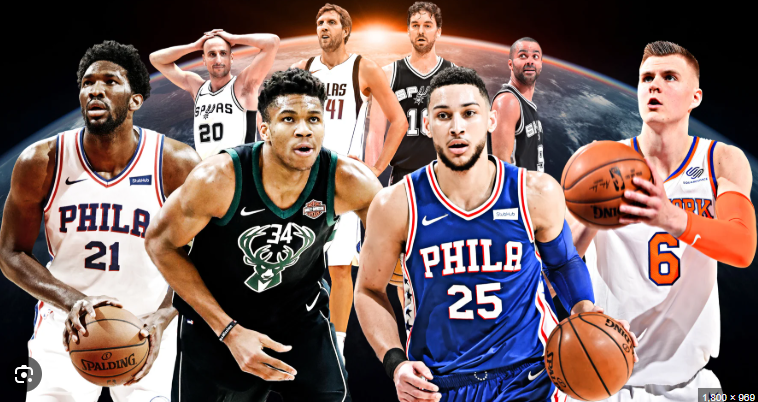
The European pipeline is the most established. The EuroLeague and national leagues in Spain, France, and Turkey serve as high-level development systems, with coaching, tactics, and physical conditioning that rival the NBA. Players like Jokić, who was drafted in the second round in 2014, developed his game in Serbia’s ABA League, where fundamentals—passing, footwork, court vision—are emphasized over athleticism. Jokić’s success (three MVP awards as of 2024) has upended conventional NBA wisdom, proving that size, skill, and basketball IQ can triumph over sheer explosiveness. Similarly, Dončić, who played professionally for Real Madrid at 16, arrived in the NBA with a veteran’s understanding of pace and game management, allowing him to dominate from his rookie year. European training academies now attract American teenagers, reversing the traditional flow of talent.
The African continent represents the next frontier. The NBA’s Basketball Africa League (BAL), launched in 2021, has grown to 12 teams in 2024, with players from 27 countries. The BAL has become a scouting showcase; in 2023, 8 BAL players were selected in the NBA Draft, including first-round picks from Senegal and Nigeria. The NBA has also opened academies in Senegal, Egypt, and South Africa, providing elite coaching and nutrition to prospects who previously had no pathway to professional basketball. The impact is measurable; the number of African-born players in the NBA has doubled since 2020, with stars like Joel Embiid (Cameroon) and Pascal Siakam (Cameroon) leading the charge. The 2026 All-Star Game will be held in Paris, but many anticipate an African-hosted game within the next decade.
Asia and Oceania are contributing increasingly. Australia’s “NBL Next Stars” program has funnelled young players like LaMelo Ball and Josh Giddey into the NBA, serving as an alternative to the US college system. Japan, the Philippines, and China have produced high-profile international players—Rui Hachimura, Jordan Clarkson, and Yao Ming’s legacy still resonates. The NBA’s partnership with China has weathered political tensions, but viewership in Asia remains robust, with over 300 million fans watching games weekly. India, with its billion-plus population, is the league’s next target; the NBA has established elite academies in Mumbai and Delhi and launched a local “India Basketball League” to develop grassroots talent.
The internationalization has reshaped NBA playing styles. The league has become more positional, with “point forwards” and “stretch bigs” replacing traditional centres. European influence is evident in the increased passing, cutting, and team-oriented offence; the 2024 season saw the highest team assists average (26.4 per game) since the 1990s. Conversely, international players have adapted to the NBA’s pace and space; shooters from Argentina and Spain now routinely shoot over 40% from three-point range. The blending of styles has made the NBA less reliant on American college development, which some scouts criticize as “athleticism over skill.” The globalization of basketball is not just about players—it is about philosophy.
The commercial implications are enormous. International players bring global fanbases; Jokić’s popularity in Serbia and the Balkans is unmatched, while Dončić has become a national icon in Slovenia. The NBA’s global merchandise sales have surged, with international players’ jerseys outselling American stars in Europe and Asia. Broadcast rights are the driving revenue; the NBA signed a $76 billion media deal in 2024, with international rights accounting for 30% of that total—up from 15% a decade ago. The league has also expanded its international tours; the 2024 preseason featured games in Abu Dhabi, Paris, and Mexico City, and regular-season games will be played in Australia by 2026.
However, challenges persist. The transatlantic travel burden is significant, with Western Conference teams flying to London for single games, disrupting rest schedules. The NBA’s collective bargaining agreement now includes stricter load management rules, but fatigue and jet lag remain concerns. Moreover, the one-and-done rule in college basketball has pushed many international prospects to bypass the NCAA entirely, raising questions about educational development. Some European leagues have accused the NBA of “poaching” young talent, offering lucrative contracts that destabilize local competitions. The global basketball ecosystem is still evolving, and the NBA’s dominance may face pushback from a more competitive European super league.
The ultimate consequence of basketball’s global takeover is the blurring of national identity. The USA men’s team, once invincible, lost to a German team without a single NBA All-Star in the 2023 FIBA World Cup, a result that sent shockwaves through American basketball. The 2024 Olympic gold medal was secured by Team USA in a tight final against Serbia—a reminder that international parity is real. The NBA’s international stars have not only elevated the league’s competitive level; they have democratized the game. Basketball is no longer America’s sport. It is the world’s sport.