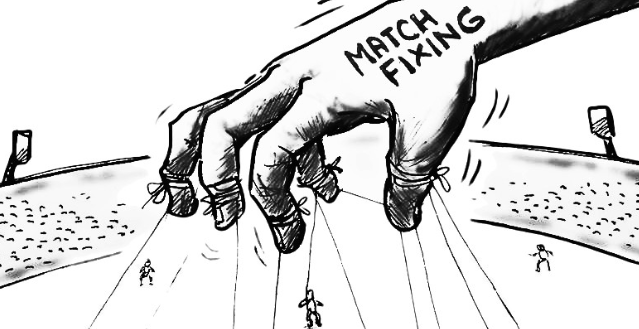
The mechanics of match-fixing have evolved. The traditional model—players and referees being bribed to lose a game—has been supplemented by more sophisticated operations. “Spot-fixing” involves manipulating specific moments: a tennis player may double-fault at a predetermined point, or a cricketer may bowl a “no-ball” to ensure a particular betting outcome. The rise of “in-play” betting has made spot-fixing more lucrative, as bettors can wager on minute-by-minute events. The 2024 tennis scandal, where a Bulgarian player was found to have fixed four matches by adjusting his service games, revealed how syndicates use encrypted messaging apps (Telegram, Signal) to coordinate. The global nature of these operations—with organisers often in one country, players in another, and bettors in a third—makes prosecution extraordinarily difficult.
The human cost is significant. Players are often entrapped through financial desperation; the average salary in lower-tier leagues is under $20,000, making a $5,000 bribe irresistible. The 2024 investigation by the International Tennis Integrity Agency (ITIA) found that 70% of match-fixing cases involve players from lower-ranked tournaments, where financial pressures are acute. The “threat-based” model, where fixers threaten to reveal personal information or harm family members, is also prevalent. The 2023 case of a Colombian footballer, whose family was threatened after he refused to fix a match, highlighted the darker elements of the trade. The psychological toll on players is immense; many report anxiety, depression, and even post-traumatic stress, particularly when they are coerced.
The governing bodies have responded with a patchwork of measures. The International Cricket Council (ICC) has a dedicated Anti-Corruption Unit (ACU), which employs undercover agents, monitors betting patterns, and conducts sting operations. The ACU’s 2024 operation, “Operation Green,” led to the arrest of 12 individuals in India and the UK, including a former Test cricketer. The ITIA has implemented a “whistleblower” programme, offering rewards for information, and has increased its investigative staff by 50%. The IOC has established a “Corruption Prevention Unit,” but its effectiveness is limited by its lack of subpoena power and its reliance on national law enforcement. The “Education and Awareness” programmes, which train athletes to recognise and resist approaches, are being integrated into all major sports’ curricula.
The betting industry has become an unwilling partner in the fight. The major operators (FanDuel, DraftKings, Bet365) have “integrity teams” that monitor unusual betting patterns and report them to the leagues. The 2024 partnership between the NBA and Sportradar, a data and technology company, uses AI to flag suspicious betting movements within seconds of a bet being placed. The “real-time” monitoring has improved detection, but the volume of data is overwhelming; the 2025 NBA season saw 2.5 million betting transactions, of which 0.1% were flagged for investigation. The “market manipulation” is also harder to detect when bets are small and dispersed across multiple operators; syndicates are increasingly using “micro-bets” to fly under the radar.
The legal framework is fragmented. The US has the Sports Betting Integrity Act, which provides federal oversight, but most nations rely on national legislation, which varies widely. The UK’s Gambling Commission has the most robust regulatory framework, including the power to revoke licences, but it operates only domestically. The “cross-border” challenge is the Achilles’ heel; the 2024 UN Treaty on Sports Integrity, which would have provided extradition provisions, failed due to a lack of consensus among the 193 member states. The “safe harbour” concept—where countries agree to cooperate on investigations—has been partially successful; the 2023 Cricket World Cup was secured by an agreement between India, Australia, and the UK to share intelligence.
The existential threat of match-fixing is that it erodes fan trust. The 2024 survey by the European Gaming and Betting Association found that 40% of fans would stop following a sport if they believed it was corrupted. The “integrity of the game” is the sport’s core asset, and its loss would be catastrophic. The fight against corruption is a continuous, evolving battle. The next frontier is AI; predictive algorithms may detect “anomalous performance” patterns in individual players (e.g., an unexpected drop in serving speed or a sudden change in shot selection) that could indicate fixing. The ultimate defence, however, is the culture of sport—the values that make fans passionate and athletes proud. As one anti-corruption investigator put it: “We can’t arrest our way out of this. We have to build a sport where fixing is so morally unacceptable that no one even considers it.”