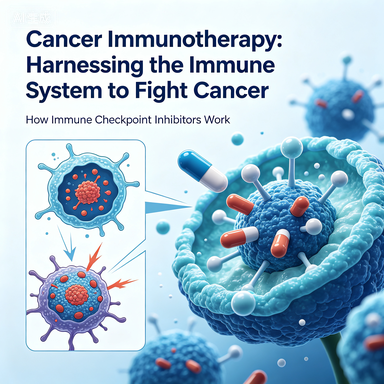
What is Immunotherapy?Traditional cancer treatments, like chemotherapy and radiation, work by directly attacking and killing cancer cells. Immunotherapy takes a completely different approach. It works by stimulating and equipping your body’s own immune system to recognize and destroy cancer cells.
Cancer cells are notoriously good at hiding from the immune system. They often use specific proteins to create a “shield” that tells immune cells to leave them alone. Immunotherapy treatments, particularly a class known as immune checkpoint inhibitors, block these proteins. By removing the shield, the immune system can finally see the cancer and attack it.
How Long Does It Extend Life?When asking how long immunotherapy extends the life of a Stage 4 cancer patient, it is vital to understand that there is no single, universal answer. The medical reality is that life expectancy depends heavily on the type of cancer, the specific genetic makeup of the tumor, and the patient’s overall health.
However, immunotherapy has fundamentally changed the statistics for several advanced cancers. For some patients, the treatment might not work at all. For others, it might extend life by several months. But the most significant breakthrough of immunotherapy is the creation of long-term survivors.
Oncologists often refer to the “tail of the survival curve.” In traditional chemotherapy statistics, the graph showing patient survival over time usually drops steadily. With immunotherapy, the graph initially drops but then often levels off horizontally. This “tail” represents a percentage of patients who experience long-term, durable remission, living for years after a Stage 4 diagnosis.
Specific Success Stories in Advanced CancerTo understand the impact of immunotherapy, it helps to look at specific types of cancer where it has been most thoroughly tested.
Advanced MelanomaHistorically, the prognosis for Stage 4 melanoma was very poor, with a five-year survival rate often in the single digits. The introduction of immunotherapy completely shifted this landscape. Clinical trials utilizing a combination of the immunotherapy treatments Opdivo (nivolumab) and Yervoy (ipilimumab) have demonstrated remarkable results. Studies have shown that over 50 percent of patients receiving this specific combination were still alive after five years.
Non-Small Cell Lung Cancer (NSCLC)Lung cancer has also seen dramatic improvements. For patients with advanced NSCLC whose tumors express high levels of a specific protein called PD-L1, the treatment Keytruda (pembrolizumab) has become a standard first-line therapy. Clinical data indicates that patients treated with Keytruda can see their life expectancy double compared to those receiving traditional chemotherapy alone, with many patients living well beyond the five-year mark.
Factors That Influence SuccessWhy does immunotherapy work miracles for one person and not another? Doctors look at several specific factors to predict success:
Biomarkers: Doctors will often test a biopsy of the tumor for specific biomarkers, like the PD-L1 protein mentioned above. High levels of certain biomarkers often indicate that the tumor is more likely to respond to immunotherapy. Tumor Mutational Burden (TMB): This refers to the number of genetic mutations inside the cancer cells. Tumors with a high TMB look very abnormal to the immune system, making it easier for immunotherapy treatments to trigger an attack. Overall Health: A patient needs a relatively functioning immune system for immunotherapy to work. Patients with severe autoimmune diseases may not be ideal candidates, as the treatment can cause the immune system to attack healthy organs. Frequently Asked QuestionsIs immunotherapy a cure for Stage 4 cancer?Medical professionals hesitate to use the word “cure” for Stage 4 cancer. However, immunotherapy has led to “durable remissions” in a significant percentage of patients. This means the cancer is either completely gone or controlled so well that the patient can live a normal life for many years.
How is immunotherapy administered?Most immunotherapy medications, including Keytruda and Opdivo, are given as an intravenous (IV) infusion in a hospital or clinic setting. The frequency of the infusions depends on the specific treatment and the plan designed by the oncologist.
What are the side effects?Because immunotherapy ramps up the immune system, the most common side effects involve inflammation. This can range from mild skin rashes and fatigue to more severe inflammation of the lungs, intestines, or liver. Patients must be monitored closely by their healthcare team to manage these immune-related adverse events.