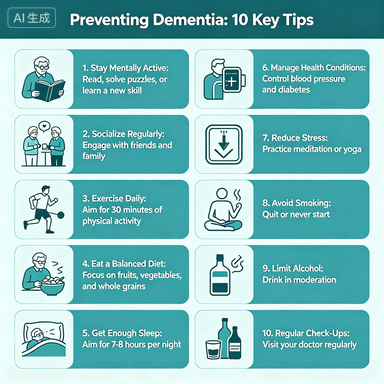
Understanding Dementia and Prevention What Is Dementia? Dementia is not a specific disease. It’s a set of symptoms:
Memory loss Impaired thinking Behavior changes These symptoms are caused by conditions like Alzheimer’s disease (most common), vascular dementia (from reduced blood flow to the brain), and others.
The Good News Dementia isn’t inevitable with age. Risk builds over decades – and that means you have decades to reduce it. What You Can Control (Modifiable Risk Factors) Risk Factor Impact Action High blood pressure Major Monitor and control Hearing loss Major Get tested, use hearing aids Depression Moderate Seek treatment Physical inactivity Major Exercise regularly Smoking Major Quit Poorly controlled diabetes Major Manage blood sugar What Can Mimic Dementia (Often Reversible) Some medical issues can cause cognitive symptoms that look like dementia – but are reversible when treated:
Thyroid problems Vitamin B12 deficiency Medication side effects Sleep apnea Untreated depression (Effective prevention starts with knowing your risks, seeing a clinician for screening, and building heart- and brain-healthy routines that protect thinking skills over time.) Why Prevention Matters Now The Numbers More than 6 million Americans live with Alzheimer’s disease. As the population ages, that number is projected to rise significantly. The Critical Window: Your 40s, 50s, and 60s While risk increases with age, action in midlife can curb brain changes years before symptoms appear.
Age Range What’s Happening Why It Matters 40s Early risk factors accumulate Prevention has maximum effect 50s Brain changes may begin silently Intervention can slow progression 60s+ Symptoms may emerge Prevention still helps 70s+ Highest risk Focus on slowing decline The Sleep Connection Sleep is a key lever: fragmented or short sleep is linked to greater buildup of Alzheimer’s‑related proteins (amyloid and tau). Treating sleep disorders may help protect cognition. The Bottom Line Addressing vascular risks, hearing loss, and inactivity helps slow decline and may delay progression from mild cognitive impairment. The sooner you start, the more brain health benefits accumulate.
Benefits of a Prevention Plan What can you expect if you start now?
Proven Benefits
Benefit Evidence
Lower dementia risk Adults combining healthy blood pressure, activity, nutrition, social engagement, and hearing protection have significantly lower risk
Delay onset by years Even if dementia develops, prevention can push it back
Slower cognitive decline MIND diet (plants, whole grains, fish, olive oil) associated with slower decline
Better daily function Structured cognitive training improves real‑world skills for years
The MIND Diet at a Glance
Eat More Eat Less
Leafy greens (kale, spinach) Red meat
Berries (especially blueberries) Butter/margarine
Beans Cheese
Nuts Pastries/sweets
Whole grains Fried/fast food
Fish
Olive oil
Social Connection Matters
Strong social ties correlate with better brain function and lower risk. Volunteering, clubs, and active friendships all help.
The ACTIVE Trial Finding
Structured cognitive training can improve specific skills and everyday function for years – especially when paired with real‑world learning and challenges.
Steps That Strengthen Brain Health – A Complete Guide
- Eat for the Brain The Science: Mediterranean/MIND‑style meals are associated with slower cognitive decline and reduced Alzheimer’s incidence.
What to Do:
Embrace: Leafy greens, berries, beans, nuts, whole grains, fish, olive oil Limit: Ultra‑processed foods, excess sugar, red meat Sample MIND Day:
Meal Foods Breakfast Oatmeal with berries + walnuts Lunch Spinach salad with chickpeas, olive oil Dinner Grilled salmon, quinoa, roasted broccoli Snack Handful of almonds + an apple
- Move Most Days The Science: Exercise benefits people with and without memory concerns. It improves blood flow to the brain and reduces inflammation.
What to Do:
Activity Type Weekly Goal Examples Moderate aerobic 150+ minutes Brisk walking, swimming, cycling Strength training 2 sessions Bodyweight, resistance bands, weights Balance work Daily Tai chi, standing on one foot Quick Start: A 20‑minute brisk walk every weekday = 100 minutes. Add a 50‑minute bike ride on weekends = 150 minutes. Done.
- Treat What’s Treatable The Science: Controlling cardiovascular risk factors is one of the most powerful things you can do.
Action Checklist:
Monitor and control blood pressure (target <120/80 for most) Monitor and control cholesterol Monitor and control diabetes (HbA1c <7% typically) Stop smoking – benefits begin within weeks Limit alcohol – no more than 1 drink/day for women, 2 for men Manage depression – seek treatment if needed Address hearing loss – hearing aids may slow cognitive decline in higher‑risk adults
- Prioritize Sleep The Science: Sleep allows the brain to clear waste products, including amyloid. Chronic poor sleep is linked to higher dementia risk.
Sleep Hygiene Checklist:
Consistent bedtime and wake time (even weekends) Daylight exposure in the morning Screen‑free wind‑down for 30–60 minutes before bed Cool, dark, quiet bedroom No caffeine after 2 PM If you snore or have insomnia, seek evaluation – treatable sleep disorders are dementia risk factors Target: 7–8 hours of quality sleep per night.
- Train Your Brain The Science: Structured cognitive training improves specific skills (memory, reasoning, speed‑of‑processing) and everyday function for years.
What to Do:
Approach Examples Targeted programs Computerized speed‑of‑processing training (e.g., Double Decision) Everyday challenges Learn a new language, musical instrument, or craft Real‑world application Combine training with actual use Stay curious Read non‑fiction, take classes, solve puzzles Note: Simple “brain games” have limited evidence. Learning something new and challenging is more effective.
- Build Community The Science: Social connection correlates with better brain function and lower risk. Loneliness is a modifiable risk factor.
Ways to Connect:
Join a club (book club, hiking group, volunteer organization) Schedule regular friend meet‑ups (weekly coffee, monthly dinner) Volunteer – helps others and yourself Take a class (in‑person learning provides both cognitive and social stimulation)
- Be Supplement‑Savvy The Science: Routine over‑the‑counter supplements (like ginkgo, fish oil, vitamin E) are not supported for dementia prevention. However, correcting deficiencies matters.
Supplement Role in Prevention Ginkgo biloba Not effective – multiple large trials show no benefit Fish oil (omega-3) Mixed evidence; no clear prevention benefit for general population Vitamin B12 Correct deficiency if present; no benefit for those with normal levels Vitamin D Correct deficiency; unclear prevention role Multivitamins Very limited evidence for cognitive benefit Bottom line: Ask your clinician which, if any, supplements make sense for you.
- If Dementia Runs in Your Family Genetics can raise risk (e.g., APOE‑ε4 gene) but do not determine destiny. Managing modifiable risks still helps – even for high‑risk adults. What to Do:
Double down on all the steps above Start earlier (your 30s or 40s) Get regular cognitive checkups Consider genetic counseling if appropriate (These habits create a durable buffer against decline across midlife and beyond.) Roadblocks and How to Beat Them Common Hurdles – Solved Roadblock Solution Mixed online messages (especially about pills) Ignore supplement hype. Focus on lifestyle – that’s where the evidence is strongest Limited access to hearing/sleep care Options expanding: OTC hearing aids, telemedicine, community clinics. Ask about coverage and trials Motivation dips Set realistic goals. Track small wins. Adjust as you learn what sticks Genetics (APOE‑ε4) High‑risk adults still benefit from cardiovascular care, exercise, hearing support, sleep treatment, and social connection Too busy Start with one change. 20 minutes of walking is better than nothing Evidence Review Bottom Line No proven pill prevents dementia. Lifestyle consistency is the most powerful tool we have. Make It Stick: Next Steps Step 1: Schedule a Brain‑Health Checkup Ask your clinician for:
Blood pressure, glucose, cholesterol Depression screening Medication review B12 and thyroid tests Hearing evaluation Sleep evaluation (if you snore or have insomnia) Step 2: Take Action If You Notice Changes If you notice memory changes, seek prompt assessment. Evidence‑based strategies to delay onset or slow progression include exercise, risk‑factor control, and cognitive engagement. Step 3: Plan Your Week (Sample) Day Activity Monday 20-min walk + MIND dinner (salmon + quinoa) Tuesday Strength training (15 min) + social call Wednesday 20-min walk + brain training (15 min) Thursday 20-min walk + MIND dinner (bean chili) Friday Strength training + social meet‑up Saturday 50-min bike ride Sunday Rest, plan for next week Step 4: Revisit Progress Every 3 Months Ask yourself:
What’s working? What’s not? What one small change can I make next? Frequently Asked Questions (FAQ) Q: Can dementia really be prevented? A: Not entirely – age and genetics matter. But research shows you can significantly lower your risk and delay onset by years through lifestyle changes.
Q: What’s the single most important thing I can do? A: If you had to pick one: control your blood pressure (exercise, diet, medication if needed). Vascular health is brain health.
Q: Do brain games work? A: Simple phone games have weak evidence. Learning something new and challenging (language, instrument, complex skill) is more effective.
Q: Does diet really matter that much? A: Yes. The MIND diet is associated with slower cognitive decline – equivalent to being 7.5 years younger cognitively.
Q: How much exercise do I need? A: At least 150 minutes of moderate activity per week (brisk walking). Plus strength training twice weekly.
Q: Can hearing aids really help prevent dementia? A: Evidence is growing. Treating hearing loss removes a major cognitive load and increases social engagement – both protective.
Key Takeaways (Summary Table) Topic Key Point What works Exercise, blood pressure control, MIND diet, sleep, social connection, treating hearing loss What doesn’t Supplement pills (ginkgo, fish oil), simple brain games Critical window 40s–60s – take action before symptoms appear Minimum exercise 150 min/week moderate activity + 2x strength Sleep target 7–8 hours of quality sleep When to start Today – benefits compound over time With family history Even more important to act – genetics aren’t destiny
Conclusion: Start Today Focus on heart–brain health, meaningful activity, restorative sleep, and routine medical tune‑ups. Starting today compounds benefits over time. Your One‑Week Starter Plan Today: Take a 10‑minute walk Tomorrow: Add one serving of leafy greens Day 3: Set a consistent bedtime Day 4: Call a friend you haven’t talked to recently Day 5: Schedule a checkup with your doctor Weekend: Try a new recipe from the MIND diet You have more control over your brain’s future than you think. Start now.
Disclaimer This article is for informational purposes only and does not constitute medical advice. Always consult with a healthcare professional before making significant changes to your diet, exercise routine, or supplement regimen.