The most visible symbol of this recovery revolution is cryotherapy—exposure to temperatures as low as -140°C for two to three minutes. Cryotherapy chambers, once limited to Olympic training centers, are now common in NBA arenas and Premier League facilities. The mechanism is elegant: extreme cold triggers vasoconstriction, reducing inflammation and muscle soreness. After the session, the body rewarms, causing blood vessels to dilate and flush out metabolic waste products like lactate. A 2022 meta-analysis in the European Journal of Sport Science reviewed 36 studies and found that whole-body cryotherapy reduced muscle soreness by an average of 20% in the 48 hours post-exercise. However, the same review noted that the effects are modest and that ice baths provide comparable benefits at a fraction of the cost.
If cryotherapy is the flashy newcomer, sleep is the timeless champion. Every major sports franchise now employs sleep specialists, with the NFL’s Seattle Seahawks pioneering the use of “sleep pods” and blue-light-blocking glasses. The science is unequivocal: sleep is when human growth hormone peaks, when neural connections consolidate motor learning, and when the immune system resets. A landmark 2019 study at Stanford tracked 120 college basketball players and found that those who slept at least 8.5 hours per night shot 9% more accurately from three-point range and ran faster in sprints. Conversely, sleep deprivation of just four hours impairs reaction time more than a blood alcohol level of 0.08%. For an F1 driver or a baseball hitter, that is the difference between victory and crash.
Nutrition has also evolved from protein shakes to precision timing. The concept of “nutrient timing”—consuming specific macronutrients at specific windows—is now standard. Immediately post-exercise, the “anabolic window” (30–60 minutes) calls for fast-digesting proteins and simple carbohydrates to replenish glycogen and initiate muscle repair. LeBron James reportedly spends $1.5 million annually on recovery, including personal chefs, cryotherapy, and hyperbaric oxygen therapy. Yet for the average recreational athlete, experts like Dr. Stacy Sims argue that the fundamentals matter more than the gadgets. “Hydration, whole foods, and consistent sleep will outperform any compression boot,” she says. “The problem is that athletes want a quick fix. Recovery is boring. It’s not Instagrammable.”
The emerging frontier is personalization. Wearable tech—WHOOP straps, Oura rings, and Garmin watches—now provides individual data on heart rate variability, resting heart rate, and sleep quality. These metrics allow athletes to gauge their readiness daily. A high heart rate variability indicates a recovered nervous system; a low reading suggests overtraining or stress, signaling the athlete to dial back intensity. The NBA’s Golden State Warriors use such data to manage veteran players like Stephen Curry, resting him on back-to-back nights despite his objections. The results speak for themselves: the Warriors have consistently maintained one of the lowest injury rates in the league.
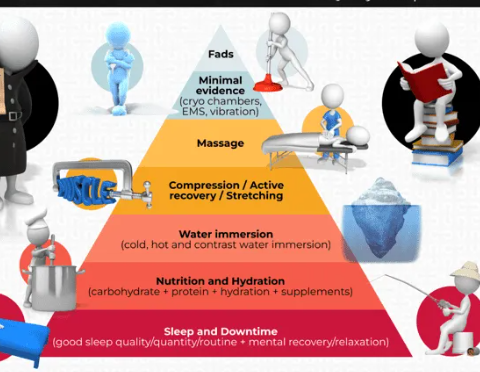
However, the recovery industry is not without its skeptics. A 2023 investigation in The British Medical Journal exposed several popular recovery products—including magnetic therapy patches and certain compression gear—as having no better than placebo effects. The takeaway is not to abandon technology but to adopt an evidence-based hierarchy. Sleep is non-negotiable. Nutrition is foundational. Active recovery, like light swimming or yoga, promotes blood flow without additional strain. Advanced modalities like cryotherapy and hyperbaric chambers should be viewed as marginal gains, not silver bullets. In the end, recovery is simple, but it is not easy. It demands discipline, consistency, and the humility to listen to one’s own body. That may be the hardest skill of all for athletes accustomed to pushing through pain.