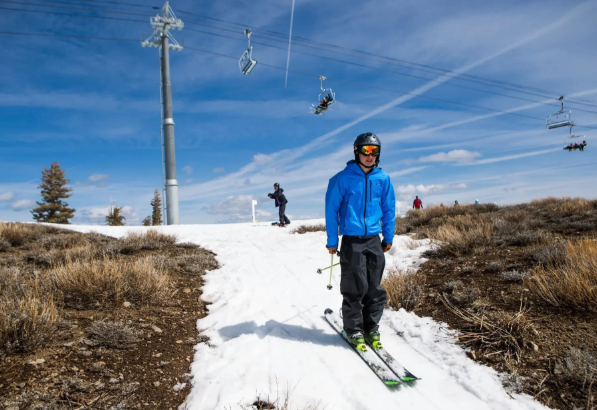
The most direct impact is on snow reliability. The World Cup ski circuit has seen a 25% reduction in the number of days with adequate natural snow since the 1990s. Europe’s famed resorts—Chamonix, Zermatt, St. Moritz—have experienced declining base depths, forcing organizers to rely increasingly on artificial snow. Artificial snow production, however, is resource-intensive; a single snowmaking machine consumes 4,000 gallons of water per hour, and the average resort uses enough electricity to power 100 homes annually. The carbon footprint of snowmaking is not negligible, and in regions with water scarcity—such as the western United States—the environmental trade-off is becoming untenable. The 2022 Beijing Games used 100% artificial snow, making it the first Winter Games entirely dependent on manufactured conditions, setting a precedent but also raising sustainability concerns.
Glacier melt is an even more severe threat. Alpine ski racing relies on glaciers for summer training, but the European Alps have lost 60% of their glacier volume since 1850, with an accelerated rate of 3.5% per year in the 2020s. Zermatt’s Theodul Glacier, a training site for multiple national teams, is projected to be non-viable by 2030. The ski jumping hills in Garmisch-Partenkirchen (Germany) and Zakopane (Poland) now require artificial refrigeration systems that run on diesel generators—a costly and carbon-heavy solution. The Norwegian team has moved some of its summer training to indoor ski halls, but these facilities are limited and do not replicate the variables of natural terrain.
Athletes themselves are adapting. Cross-country skiers have shortened their seasons, compressing competitions into January–March windows, but the reduced snow window increases the risk of cancellations. The 2023–24 FIS World Cup season saw 14 events cancelled or relocated due to insufficient snow, forcing federations to absorb significant financial losses. Athletes are also facing health impacts; the reduced snowpack affects water availability in mountain communities, with some resorts unable to support the infrastructure required for large events. The mental toll is also significant; many alpine athletes report anxiety about their careers, as the seasons become unpredictable and their training calendars are disrupted.
The IOC has responded with its “Climate Action Strategy,” which mandates that all future Olympic Games achieve net-zero carbon emissions and reduce the environmental footprint by 50%. The strategy includes using renewable energy for snowmaking, sustainable transport for athletes, and offsetting unavoidable emissions through carbon credits. The 2026 Milano-Cortina Games, for instance, will use 80% renewable energy and have banned diesel generators. The IOC has also implemented a “host city selection” criteria that includes a climate risk assessment; cities with temperatures above 0°C during the Games period are now disqualified. This has already eliminated several European and North American candidates.
The broader winter sports ecosystem—vacation resorts, local economies, equipment manufacturers—is also grappling with the change. The tourism industry in the Alps, worth an estimated $60 billion annually, has seen a 20% drop in skier visits since 2010. Resorts are investing in all-year attractions—mountain biking, hiking, wellness spas—to diversify their revenue, but the transformation is slow and capital-intensive. Equipment manufacturers like Rossignol and Atomic are developing skis optimized for artificial snow conditions, which have different friction and density, but these adaptations cannot compensate for reduced terrain availability.
The most radical proposal is to shift the Winter Olympics to a “rotating indoor model,” using artificial snow and ice facilities located in climate-controlled environments. The Beijing 2022 model of dedicated indoor venues has been studied, but indoor ski and snowboard facilities require massive energy inputs, potentially offsetting the carbon gains from avoiding outdoor conditions. Some experts advocate for a “mobile Games,” where events move to the hemisphere with winter in July (South America, Southern Africa), but this remains logistically improbable. The future of winter sports may be a “hybrid” approach: some outdoor events in colder regions (Russia, Canada, Scandinavia) and indoor events for others, creating a bifurcated calendar.
The underlying issue is that winter sports are a symptom of the larger climate crisis, not its cause. The athletes, the fans, and the governing bodies are united in their advocacy for emissions reductions, but the timeline is compressed. As the 2024 Winter Sports Climate Summit concluded, “We have 10 years to change our trajectory, or many winter sports will become niche activities, confined to a shrinking band of latitudes.” The legacy of winter sports is at stake, but so is the planet. The two are inseparable.