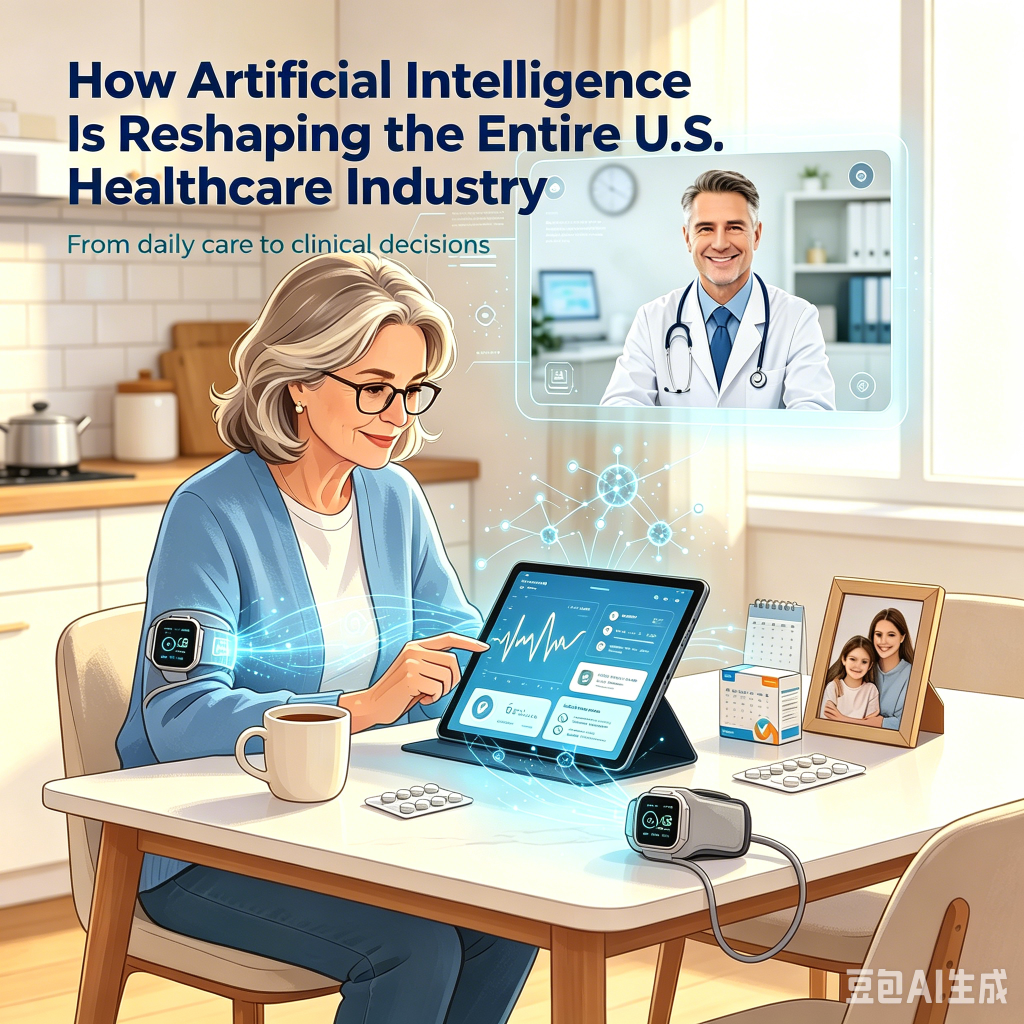
Widespread clinical AI rollout forms the core driver of this industry-wide transformation. As of 2025, more than two-thirds of practicing physicians in the United States regularly utilize AI-assisted tools during daily patient consultations, a steep jump from less than 40% recorded just two years prior. Major hospital systems hold the highest AI penetration rate at 27%, followed by outpatient clinics and medical insurance providers, as administrators recognize AI’s ability to resolve long-standing staffing burnout and workflow bottlenecks within traditional care models. Medical imaging analysis stands as the most mature and widely FDA-cleared AI application in U.S. hospitals. Thousands of radiology departments integrate algorithm platforms to automatically scan CT scans, X-rays and MRI images for early signs of lung cancer, diabetic retinopathy, brain lesions and structural bone abnormalities. These AI systems cut diagnostic waiting time from hours to minutes while lowering human oversight errors, particularly beneficial for rural medical facilities that face persistent shortages of specialized radiology specialists nationwide. Generative AI streamlines administrative documentation work that consumes nearly one-third of a typical doctor’s working hours each day. Ambient clinical recording tools capture natural conversations between providers and patients in real time, converting unstructured dialogue into standardized, compliant electronic health record entries without manual typing. Platforms such as Abridge and Nuance have become standard subscriptions for mid-sized and large medical groups, drastically cutting paperwork pressure and letting clinicians allocate more time to direct patient care instead of charting tasks. AI-powered predictive patient monitoring delivers life-saving early intervention inside intensive care units and general wards across the country. Leading medical research institutions including Johns Hopkins Hospital deploy predictive analytics models to detect subtle vital sign shifts up to six hours before acute health deterioration, including sepsis, heart failure and respiratory decompensation. These alert systems reduce emergency code events, shorten hospital stays and lower readmission rates, creating measurable cost savings for both hospital operators and federal Medicare reimbursement programs. The United States leads global development of AI for pharmaceutical research and new drug development cycles. Traditional small-molecule and biologic drug trials often take a decade or longer with billions in upfront investment; machine learning models rapidly screen molecular compounds, simulate drug-target interactions and identify eligible trial participants to condense research timelines significantly. Major pharmaceutical giants and biotech startups based in Boston, San Diego and the Bay Area now allocate double-digit percentages of R&D budgets toward AI-driven discovery pipelines. Regulatory oversight from the U.S. Food and Drug Administration creates a structured framework for responsible medical AI commercialization. The FDA has authorized more than one thousand AI-enabled medical devices and algorithm platforms to date, establishing clear submission pathways for pre-market approval, ongoing algorithm monitoring and post-launch performance tracking. This structured regulatory approach builds public trust while preventing untested, high-risk AI systems from entering direct patient care environments across state and federal healthcare networks. Leading oncology treatment centers across America rely on genomic AI analysis to deliver personalized cancer therapy plans. Companies such as Tempus build proprietary datasets combining patient tumor sequencing data, treatment outcomes and published clinical research to match individual patients with targeted immunotherapy, chemotherapy or clinical trial opportunities. Approximately 80% of comprehensive cancer centers in the U.S. now implement this type of precision oncology AI to improve long-term survival statistics for complex malignancies. AI creates meaningful optimization within America’s fragmented medical insurance billing and claims processing ecosystem. Automated algorithms flag coding errors, detect fraudulent billing submissions, verify patient eligibility and accelerate claim adjudication, cutting administrative waste that totals hundreds of billions of dollars annually industry-wide. Insurance carriers deploy proprietary AI risk models to design transparent premium structures while reducing dispute volumes between providers, payers and individual policyholders. Workforce gaps represent one of the most substantial long-term challenges limiting full AI scaling in U.S. healthcare. Industry projections estimate the nation will face a shortage of 120,000 professionals with combined clinical and artificial intelligence expertise by 2027, creating bottlenecks for system-wide algorithm deployment, data governance and model maintenance. Universities across the country have rapidly launched cross-disciplinary medical informatics degree tracks to address this critical talent deficit over the next five years. Patient data privacy compliance remains a central design consideration for every U.S. medical AI build, aligned with HIPAA federal privacy legislation and state-level data protection rules like California’s CCPA. Developers must implement end-to-end encryption, de-identification protocols and strict access controls to prevent unauthorized exposure of protected health information. Many hospital systems choose on-premises local AI deployment instead of public cloud hosting specifically to satisfy stringent data residency and audit requirements. Venture capital investment continues flooding into American healthcare AI startups, solidifying the United States’ global competitive edge in vertical medical artificial intelligence. Total capital spending on U.S. healthcare AI solutions tripled between 2024 and 2025, outpacing funding for nearly all other vertical enterprise AI sectors. Multiple billion-dollar unicorns have emerged focused on clinical decision support, medical evidence synthesis and outpatient workflow automation, proving sustainable unit economics for subscription-based medical AI services. Looking forward, U.S. healthcare AI will transition from auxiliary operational tools into core clinical decision partners integrated into every stage of patient care, from preventive primary screenings through chronic disease management and post-surgical recovery. Federal public health agencies will further leverage large-scale AI population analytics to track infectious disease trends, allocate public health resources and address healthcare access disparities between urban metro regions and underserved rural communities nationwide.
-1-300x300.png)
-4-300x300.png)