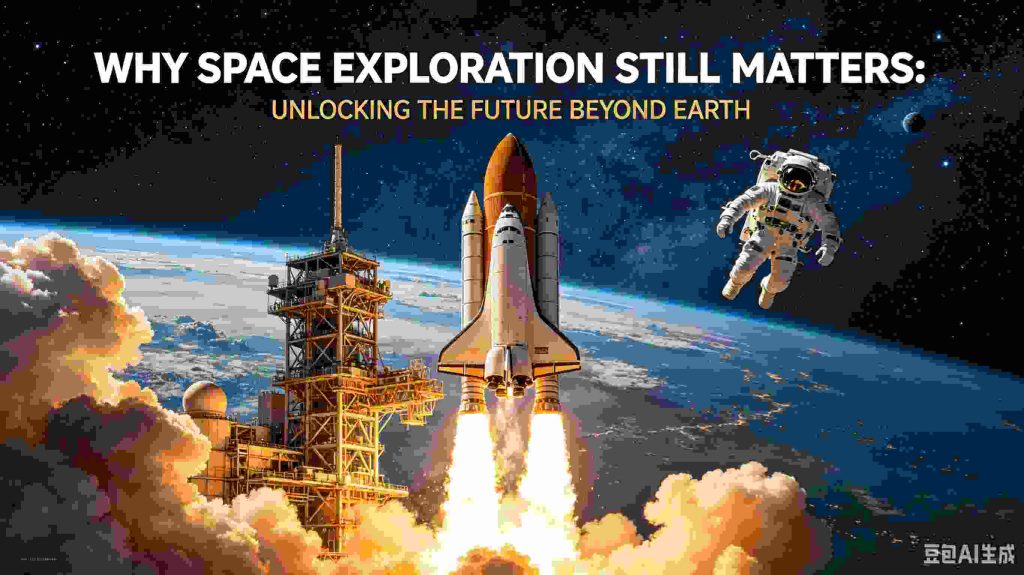
Space exploration has consistently driven technological innovation that eventually benefits everyday life on Earth. Many technologies originally developed for space missions have found practical applications in medicine, communications, transportation, and consumer electronics. Lightweight materials, advanced water purification systems, satellite navigation, weather forecasting, wireless communications, and high-performance computing all owe part of their development to investments in space research. Engineers designing equipment capable of surviving the harsh conditions of space often create solutions that later become useful in hospitals, factories, and households. The demanding requirements of space missions encourage scientists to solve problems that would otherwise remain unexplored, resulting in inventions that improve safety, efficiency, and quality of life for millions of people around the world.
One of the most valuable contributions of space exploration is the ability to observe Earth from orbit. Satellites provide continuous information about weather systems, climate change, natural disasters, agricultural productivity, ocean currents, and environmental health. Meteorologists rely on satellite data to improve weather forecasts, giving communities more time to prepare for hurricanes, floods, and severe storms. Environmental scientists monitor deforestation, melting glaciers, rising sea levels, and air pollution using images captured from space. Farmers benefit from satellite-guided precision agriculture that helps optimize irrigation, fertilizer use, and crop management. Governments and humanitarian organizations also use satellite technology during emergencies to coordinate disaster response and assess damage more efficiently, demonstrating that exploring space directly contributes to protecting lives and natural resources on Earth.
Scientific discovery remains at the heart of every major space mission. Telescopes positioned beyond Earth’s atmosphere allow astronomers to observe distant galaxies, black holes, nebulae, and planetary systems with extraordinary clarity. Robotic spacecraft explore planets, moons, asteroids, and comets, collecting data that reveals how our solar system formed billions of years ago. Each mission answers important questions while raising new ones, expanding humanity’s understanding of physics, chemistry, geology, and biology. The discovery of water ice on the Moon and Mars has significantly increased scientific interest in future exploration because water is essential for sustaining human life. Researchers also investigate whether microbial life may have existed elsewhere in our solar system, a question that could fundamentally reshape humanity’s understanding of life itself.
The possibility of establishing a long-term human presence beyond Earth has become increasingly realistic as technology advances. Space agencies and private aerospace companies are developing spacecraft capable of carrying astronauts farther than ever before, with ambitious plans to return humans to the Moon and eventually send crews to Mars. Building sustainable habitats on other worlds presents enormous engineering challenges involving life support systems, food production, radiation protection, energy generation, and resource management. Solving these problems encourages innovation in renewable energy, recycling technologies, autonomous robotics, and advanced manufacturing. Even if permanent settlements remain decades away, the research conducted today is already generating practical solutions that improve sustainability and resilience here on Earth.
International cooperation has become one of the defining characteristics of modern space exploration. Large scientific projects often involve multiple countries sharing expertise, funding, and technology to achieve goals that no single nation could accomplish alone. Collaborative missions strengthen diplomatic relationships while promoting peaceful scientific cooperation across political boundaries. Scientists, engineers, astronauts, and researchers from diverse backgrounds work together to solve complex technical challenges and share valuable discoveries with the global scientific community. These partnerships demonstrate that space exploration can unite humanity around common objectives, encouraging collaboration rather than competition in addressing scientific and technological challenges that affect everyone.
Despite its many benefits, space exploration also raises important ethical, financial, and environmental questions. Launching rockets requires significant resources, and critics argue that those funds could instead address poverty, healthcare, education, or climate change. Others express concern about increasing amounts of space debris, satellite congestion, and the environmental impact of rocket launches. There are also ongoing debates regarding the commercial use of space resources, ownership of extraterrestrial materials, and the long-term preservation of celestial environments. These concerns highlight the importance of establishing responsible international policies that balance scientific progress with environmental protection, sustainability, and equitable access to the benefits of space exploration.
Looking toward the future, space exploration will likely become even more important as humanity seeks answers to some of its greatest scientific questions. Advances in artificial intelligence, robotics, reusable launch systems, and next-generation telescopes will enable more ambitious missions than ever before. Scientists hope to discover Earth-like planets capable of supporting life, study the origins of the universe, develop technologies for deep-space travel, and better understand how planetary systems evolve over billions of years. Whether future generations establish research stations on the Moon, send astronauts to Mars, or discover evidence of life beyond Earth, the pursuit of knowledge will continue to inspire innovation, international collaboration, and scientific progress. Space exploration is ultimately not just about reaching distant worlds; it is about expanding human potential, improving life on Earth, and ensuring that curiosity remains one of civilization’s greatest strengths.
-1-300x300.png)


-6-300x300.png)