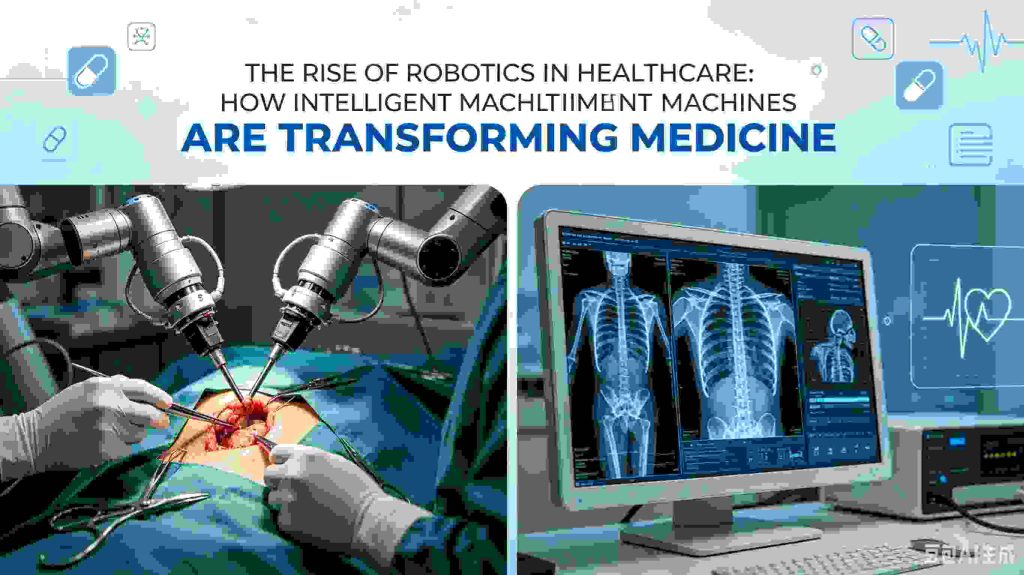
One of the most well-known applications of robotics in medicine is robotic-assisted surgery. These systems allow surgeons to perform highly precise procedures using robotic arms controlled from a console. Unlike traditional surgery, where human hands are directly responsible for movement, robotic systems filter and refine the surgeon’s motions, eliminating tremors and enabling extremely fine control. This is particularly valuable in minimally invasive surgeries, where small incisions are used to reduce recovery time and lower the risk of complications. Robotic systems provide high-definition 3D visualization of the surgical area, allowing surgeons to see details that would otherwise be difficult to observe. Procedures in fields such as urology, gynecology, cardiology, and orthopedics have all benefited from robotic assistance, improving accuracy and reducing patient trauma.
Beyond surgery, robotics is playing an increasingly important role in rehabilitation medicine. Robotic exoskeletons and assistive devices are helping patients recover from injuries, strokes, and neurological disorders by supporting movement and guiding physical therapy exercises. These devices can be programmed to adjust resistance and support levels based on the patient’s condition, allowing for personalized rehabilitation programs. For individuals with spinal cord injuries or severe mobility impairments, robotic systems can even restore partial walking ability, significantly improving quality of life. Rehabilitation robots also provide consistent and repeatable therapy sessions, which can enhance recovery outcomes compared to traditional manual therapy alone. As technology improves, these systems are becoming more lightweight, affordable, and adaptable to different patient needs.
Robotics is also transforming hospital logistics and operations. In many modern healthcare facilities, autonomous robots are used to transport medications, laboratory samples, surgical instruments, and medical supplies throughout hospital corridors. These systems reduce the workload of healthcare staff, allowing nurses and doctors to focus more on patient care rather than administrative or logistical tasks. Robots equipped with navigation sensors and artificial intelligence can move safely through busy hospital environments, avoiding obstacles and optimizing delivery routes. Some hospitals also use robotic systems for disinfection purposes, using ultraviolet light or chemical sprays to sterilize rooms and reduce the spread of infections. This has become especially important in preventing hospital-acquired infections and maintaining hygiene standards in sensitive medical environments.
Artificial intelligence is deeply integrated into many modern healthcare robotics systems, enhancing their decision-making capabilities and adaptability. AI algorithms allow robots to analyze medical data, recognize patterns, and assist in diagnostic processes. In imaging analysis, for example, AI-powered systems can help detect tumors, fractures, or abnormalities in X-rays, MRIs, and CT scans with high accuracy. When combined with robotics, these systems can assist in biopsy procedures or guide surgical instruments with precision based on real-time data analysis. Machine learning models also enable robots to improve their performance over time by learning from large datasets of medical procedures. This integration of AI and robotics is creating increasingly intelligent systems capable of supporting complex medical decision-making processes.
Despite its many advantages, the use of robotics in healthcare also raises important ethical, technical, and economic challenges. One major concern is the cost of implementing robotic systems, which can be extremely high and may limit access to advanced medical technology in lower-income regions. There are also concerns about the potential loss of human interaction in healthcare, as patients may feel less connected to care providers when machines are involved in treatment. Additionally, the reliability and safety of robotic systems must be carefully ensured, as any malfunction during a medical procedure could have serious consequences. Questions regarding liability, data privacy, and decision-making responsibility also arise when AI and robotics are involved in patient care. These challenges highlight the need for careful regulation, ongoing research, and ethical guidelines in the deployment of medical robotics.
Training and education in healthcare are also being transformed by robotic technology. Surgical simulators and robotic training platforms allow medical students and professionals to practice procedures in highly realistic virtual or robotic environments before working with actual patients. This improves skill development, reduces training risks, and enhances confidence in performing complex procedures. Simulation-based training also allows for repeated practice of rare or high-risk scenarios, ensuring that healthcare professionals are better prepared for real-world situations. As robotic systems become more advanced, medical education is increasingly incorporating digital and robotic tools as essential components of modern training programs.
The future of robotics in healthcare is expected to involve even greater levels of automation, precision, and integration with digital health systems. Emerging technologies such as nanorobotics, which involve microscopic machines operating within the human body, could revolutionize targeted drug delivery and internal diagnostics. Fully autonomous surgical robots, capable of performing certain procedures with minimal human intervention, are also being researched. Combined with advancements in artificial intelligence, biotechnology, and sensor systems, medical robotics may eventually enable highly personalized and predictive healthcare. This could allow diseases to be detected and treated at earlier stages, improving survival rates and reducing the overall burden on healthcare systems.
Robotics in healthcare represents a powerful convergence of engineering, medicine, and computer science that is reshaping the future of medical practice. While challenges remain, the potential benefits in terms of precision, efficiency, accessibility, and patient outcomes are significant. As technology continues to evolve, robots are expected to become increasingly integrated into everyday medical care, working alongside human professionals to deliver safer and more effective treatments. The ongoing development of healthcare robotics reflects a broader transformation in medicine, where innovation is continuously expanding the boundaries of what is possible in diagnosis, treatment, and patient care.


-2-300x300.png)
-1-1-300x300.png)