-6-1024x1024.png)
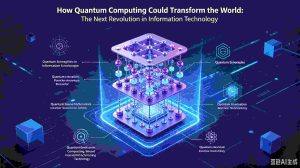
The foundation of quantum computing lies in the strange behavior of particles at the atomic and subatomic levels. In everyday life, objects follow the predictable rules of classical physics. However, extremely small particles such as electrons and photons behave according to the laws of quantum mechanics, which often appear surprising and even counterintuitive. One of the most important concepts is superposition, where a quantum particle can exist in multiple possible states until it is measured. In a quantum computer, qubits take advantage of this phenomenon, allowing them to represent many possible combinations of information at the same time. Instead of evaluating one solution after another like a classical computer, a quantum computer can explore many possibilities simultaneously, making certain types of calculations dramatically more efficient.
Another important principle that gives quantum computers their extraordinary power is quantum entanglement. When two or more particles become entangled, their properties remain connected regardless of the physical distance separating them. A change observed in one particle immediately influences the state of its entangled partner according to the rules of quantum mechanics. Scientists use this remarkable property to coordinate qubits inside quantum computers, enabling highly complex calculations that would be impossible for conventional systems. Entanglement allows information to be processed collectively rather than independently, creating computational possibilities far beyond the capabilities of today’s digital computers. Although the mathematics behind entanglement is highly sophisticated, its practical result is the ability to solve certain scientific and engineering problems much more efficiently.
One of the most promising applications of quantum computing is in pharmaceutical research and drug discovery. Developing a new medicine often requires scientists to analyze how molecules interact with one another at the atomic level. Classical computers struggle to simulate these interactions accurately because molecular systems become increasingly complex as the number of atoms grows. Quantum computers, however, naturally model quantum behavior, making them ideally suited for chemical simulations. Researchers believe future quantum systems could help identify promising drug candidates, predict chemical reactions, and design new materials with unprecedented precision. Faster molecular simulations may significantly reduce development costs while accelerating treatments for diseases such as cancer, Alzheimer’s disease, and various genetic disorders that currently require years of research before effective therapies become available.
Artificial intelligence and machine learning may also experience major advances through quantum computing. Modern AI systems rely on analyzing enormous amounts of data to recognize patterns, make predictions, and improve decision-making. As datasets continue expanding across industries such as healthcare, finance, transportation, and scientific research, computational demands increase dramatically. Quantum algorithms could potentially process these datasets more efficiently than classical methods, accelerating training processes and improving optimization techniques. Researchers are exploring quantum-enhanced machine learning models capable of solving complex optimization problems that currently consume vast computing resources. Although practical quantum AI remains an emerging field, ongoing research suggests that combining artificial intelligence with quantum computing could unlock entirely new capabilities for data analysis and scientific discovery.
Cybersecurity represents another field likely to be transformed by quantum computing. Most modern encryption methods rely on mathematical problems that are extremely difficult for classical computers to solve within a reasonable amount of time. Quantum computers, however, may eventually solve some of these problems much faster using specialized quantum algorithms. This possibility has motivated governments, universities, and technology companies to develop quantum-resistant encryption methods designed to remain secure even in a future where large-scale quantum computers become available. At the same time, quantum mechanics also enables entirely new approaches to secure communication through quantum cryptography. Quantum key distribution allows two parties to detect attempts at eavesdropping because observing quantum information changes its state. These technologies illustrate how quantum computing creates both new cybersecurity challenges and innovative security solutions.
Despite its enormous potential, quantum computing still faces significant technical obstacles before becoming widely available. Qubits are extremely sensitive to environmental disturbances such as heat, electromagnetic interference, and tiny vibrations. Even minor disruptions can introduce computational errors that reduce reliability. Maintaining stable quantum states often requires temperatures close to absolute zero using highly specialized refrigeration systems. Engineers are actively developing improved hardware, better error correction methods, and more stable qubit technologies to overcome these limitations. Current quantum computers remain relatively small compared with the systems scientists ultimately hope to build, but progress continues steadily as research institutions and private companies introduce increasingly sophisticated experimental platforms each year.
Governments and major technology companies around the world have recognized the strategic importance of quantum computing and continue investing heavily in research and development. Universities are establishing interdisciplinary programs that combine physics, computer science, mathematics, and engineering to prepare future generations of quantum researchers. Start-up companies are exploring commercial applications ranging from logistics optimization and financial modeling to advanced manufacturing and climate research. International collaboration plays an essential role because quantum computing requires expertise from many scientific disciplines working together. As the technology matures, new industries and career opportunities are expected to emerge, creating demand for professionals with specialized knowledge in quantum information science and related fields.
Looking ahead, quantum computing should be viewed as a complement rather than a replacement for traditional computers. Everyday tasks such as browsing the internet, writing documents, streaming videos, or sending emails will continue to rely on classical computing because these systems are already highly efficient for general-purpose applications. Instead, quantum computers will likely be used to solve exceptionally difficult scientific, industrial, and mathematical problems that remain beyond the reach of conventional machines. Their greatest value will come from accelerating research, discovering new materials, improving medical treatments, optimizing complex systems, and expanding humanity’s understanding of the natural world. Although widespread commercial adoption may still take years, quantum computing represents one of the most promising technological frontiers of the twenty-first century, with the potential to reshape science and innovation for generations to come.
-2-300x300.png)