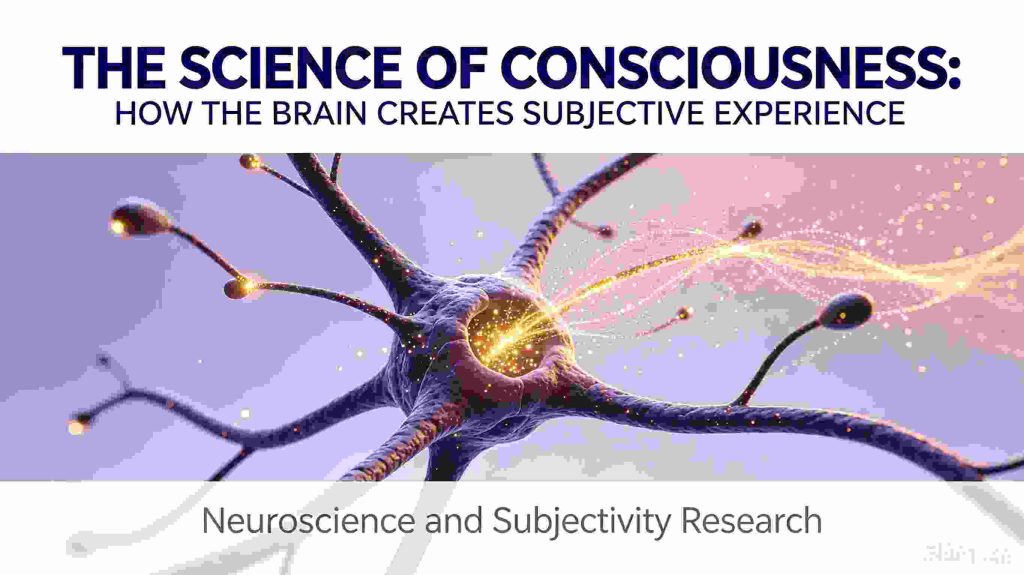
One of the central questions in consciousness research is how subjective experience emerges from neural activity. The brain consists of billions of neurons connected through trillions of synapses, forming complex networks that process information continuously. Scientists have identified specific brain regions, such as the prefrontal cortex, thalamus, and parietal cortex, that are heavily involved in conscious awareness. These regions appear to form dynamic networks that integrate sensory information, memory, and attention. The global workspace theory suggests that consciousness arises when information is widely broadcast across these networks, allowing different brain systems to access and process it simultaneously. This integration enables humans to experience a unified perception of the world rather than fragmented sensory inputs.
Another influential theory is integrated information theory, which proposes that consciousness corresponds to the level of information integration within a system. According to this model, a system is conscious to the extent that it can generate and integrate a large amount of information in a unified manner. This theory attempts to quantify consciousness mathematically, offering a potential framework for comparing different systems, including animals and possibly artificial intelligence. While still controversial, integrated information theory has stimulated significant discussion about whether consciousness could exist in non-biological systems and how it might be measured objectively.
Neuroscientific research has also shown that consciousness is closely linked to patterns of brain activity rather than individual regions acting in isolation. Techniques such as functional magnetic resonance imaging (fMRI) and electroencephalography (EEG) allow scientists to observe changes in brain activity associated with different states of awareness, including wakefulness, sleep, anesthesia, and coma. These studies reveal that conscious awareness is associated with highly coordinated and dynamic neural activity, while unconscious states show reduced connectivity and less complex signaling patterns. Interestingly, even small disruptions in brain connectivity can significantly alter perception, attention, and self-awareness.
Sleep and altered states of consciousness provide valuable insights into how awareness is constructed. During dreaming, for example, the brain generates vivid experiences without external sensory input, suggesting that consciousness can arise internally through memory and imagination. In contrast, deep sleep and general anesthesia significantly reduce conscious awareness by disrupting communication between brain regions. Psychedelic substances also alter consciousness by changing neural connectivity patterns, often increasing the complexity and unpredictability of brain activity. These different states demonstrate that consciousness is not fixed but highly flexible, depending on how neural systems interact at any given moment.
The role of attention in consciousness is another key area of study. Attention determines which information becomes part of conscious experience and which remains unconscious. The brain receives far more sensory input than it can process at once, so attentional mechanisms act as filters that prioritize certain signals. This selective process allows individuals to focus on relevant information while ignoring distractions. However, attention and consciousness are not identical; it is possible for the brain to process information without conscious awareness, as seen in subliminal perception experiments. This distinction suggests that consciousness represents a specific level of information processing rather than all brain activity.
Artificial intelligence research has also contributed to the study of consciousness by providing computational models that mimic aspects of human cognition. While current AI systems can process information and perform complex tasks, there is ongoing debate about whether they possess any form of subjective experience. Most scientists argue that AI systems simulate intelligence without true consciousness, as they lack biological structures and self-aware subjective states. However, studying AI helps researchers better understand which features of information processing might be necessary for consciousness and which are not. This comparison between biological and artificial systems continues to shape discussions about the future of intelligent machines.
Philosophically, consciousness raises deep questions about the relationship between mind and matter. Materialist perspectives argue that consciousness emerges entirely from physical processes in the brain, while dualist perspectives suggest that consciousness may involve non-physical properties. Although modern science largely supports materialist explanations, the subjective nature of experience remains difficult to fully explain through objective measurements alone. This gap between physical processes and subjective experience is what makes consciousness such a challenging and fascinating subject of study.
Consciousness research continues to evolve rapidly, combining insights from neuroscience, psychology, physics, and computer science. While a complete explanation remains elusive, progress is steadily being made in understanding the neural correlates of awareness and the mechanisms that support subjective experience. As technology advances, future discoveries may bring us closer to answering one of humanity’s oldest questions: how the brain gives rise to the experience of being conscious.
-2-1-300x300.png)
-5-300x300.png)