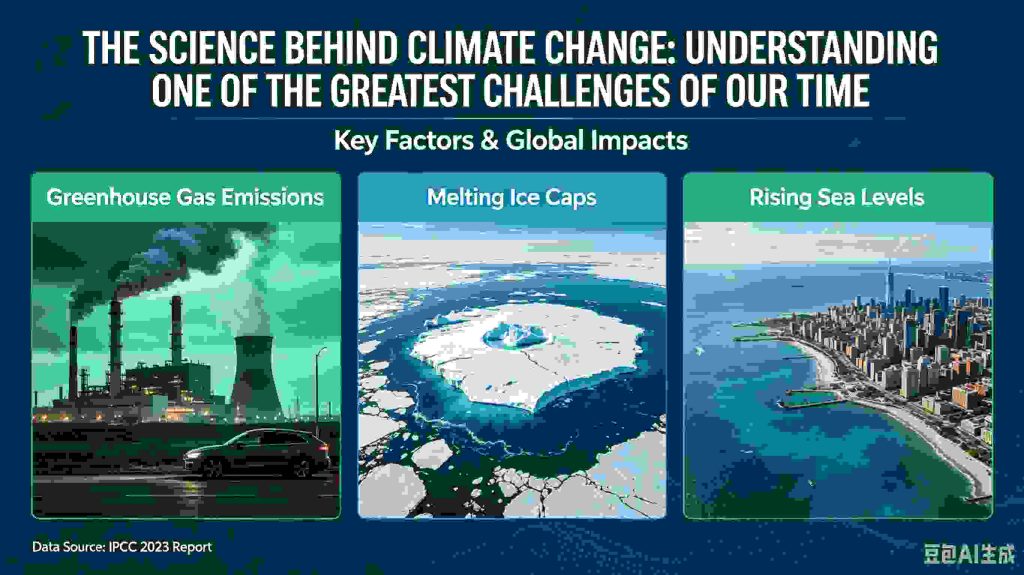
Earth’s climate is regulated by a delicate balance between incoming solar radiation and the heat that the planet radiates back into space. Naturally occurring greenhouse gases such as carbon dioxide, methane, nitrous oxide, and water vapor trap part of this outgoing heat, creating what scientists call the greenhouse effect. Without this natural process, the average temperature of Earth would be far below freezing, making life as we know it impossible. Problems arise when human activities dramatically increase the concentration of these gases, strengthening the greenhouse effect and causing additional heat to remain in the atmosphere. Since the late eighteenth century, industrialization has accelerated the combustion of coal, oil, and natural gas, releasing billions of tons of carbon dioxide every year. Measurements collected from ice cores, atmospheric monitoring stations, and satellites consistently show that greenhouse gas concentrations are now significantly higher than they were before widespread industrial development, providing strong evidence that human influence is changing the composition of Earth’s atmosphere.
The consequences of rising global temperatures extend far beyond warmer summers. Higher average temperatures increase the likelihood of extreme weather events, including heat waves, droughts, heavy rainfall, and more intense tropical storms. Warmer oceans provide additional energy that can strengthen hurricanes and typhoons, while changing atmospheric circulation patterns influence rainfall distribution across entire continents. In some regions, prolonged drought reduces agricultural productivity and threatens freshwater supplies, while other areas experience more frequent flooding due to heavier precipitation. Scientists use sophisticated climate models to simulate these complex interactions, helping governments and emergency planners prepare for future environmental conditions. Although no individual weather event can be attributed solely to climate change, long-term observations reveal clear trends that are consistent with predictions made by climate science over several decades.
The world’s oceans play a critical role in regulating Earth’s climate by absorbing both heat and carbon dioxide from the atmosphere. However, this buffering capacity comes with significant consequences. As seawater absorbs more carbon dioxide, chemical reactions lower the ocean’s pH, resulting in a process known as ocean acidification. More acidic oceans make it increasingly difficult for corals, shellfish, and many marine organisms to build calcium carbonate shells and skeletons. Rising ocean temperatures also contribute to coral bleaching, disrupting some of the planet’s most biologically diverse ecosystems. Additionally, warmer water expands in volume while melting glaciers and polar ice sheets add more freshwater to the oceans, contributing to rising sea levels. Coastal communities around the world face growing risks from erosion, saltwater intrusion, stronger storm surges, and the gradual loss of low-lying land, making ocean science an essential component of climate research.
Climate change also has profound implications for biodiversity and ecosystems. Plants and animals have evolved over thousands of years to thrive under relatively stable environmental conditions, but rapid climate shifts challenge their ability to adapt. Many species are changing migration patterns, breeding seasons, and geographic ranges as temperatures rise. Some mountain and polar species have limited opportunities to relocate because suitable habitats continue shrinking. Forests experience increased stress from drought, wildfires, and insect outbreaks, reducing their ability to store carbon and support wildlife. Wetlands, grasslands, and freshwater ecosystems are also affected by changing precipitation patterns and higher temperatures. Scientists emphasize that preserving biodiversity is important not only for protecting wildlife but also for maintaining ecosystem services such as pollination, clean water, fertile soil, and natural carbon storage that directly support human societies.
Addressing climate change requires a combination of technological innovation, policy development, and individual action. Renewable energy sources such as solar, wind, hydroelectric, and geothermal power offer alternatives to fossil fuels while producing significantly lower greenhouse gas emissions. Advances in battery storage, smart electrical grids, and energy-efficient technologies continue improving the reliability and affordability of clean energy systems. Many industries are investing in carbon capture technologies, sustainable manufacturing processes, and low-emission transportation solutions. Governments implement regulations, emissions targets, and international agreements designed to encourage long-term reductions in greenhouse gas emissions. Meanwhile, individuals contribute by conserving energy, reducing waste, supporting sustainable products, improving home efficiency, and choosing transportation options with lower environmental impacts. Although no single solution is sufficient on its own, coordinated efforts across multiple sectors can substantially reduce future climate risks.
Climate science continues to evolve as researchers gather increasingly detailed observations from satellites, ocean buoys, weather stations, ice cores, and computer simulations. Modern climate models incorporate vast amounts of data to improve projections of future temperature trends, precipitation patterns, sea level rise, and ecosystem responses under different emissions scenarios. While uncertainties remain regarding the precise magnitude and timing of specific regional impacts, the overwhelming scientific consensus is that continued greenhouse gas emissions will increase the likelihood of more severe environmental and economic consequences. Ongoing research helps policymakers, businesses, farmers, engineers, and healthcare professionals make informed decisions that strengthen resilience and reduce vulnerability to climate-related risks. Scientific transparency, peer review, and international collaboration remain essential to improving the accuracy of climate projections and developing effective adaptation strategies.
Climate change represents one of the defining scientific and societal challenges of our generation, but it also presents an opportunity to rethink how humanity produces energy, manages natural resources, and designs future cities. Continued investment in research, education, innovation, and international cooperation can accelerate the development of cleaner technologies while improving environmental sustainability and economic resilience. Throughout history, societies have repeatedly demonstrated their ability to overcome complex challenges through scientific discovery and technological progress. By combining evidence-based decision-making with global collaboration, humanity can reduce the impacts of climate change while creating healthier communities, stronger economies, and a more sustainable future for generations to come.


-4-300x300.png)