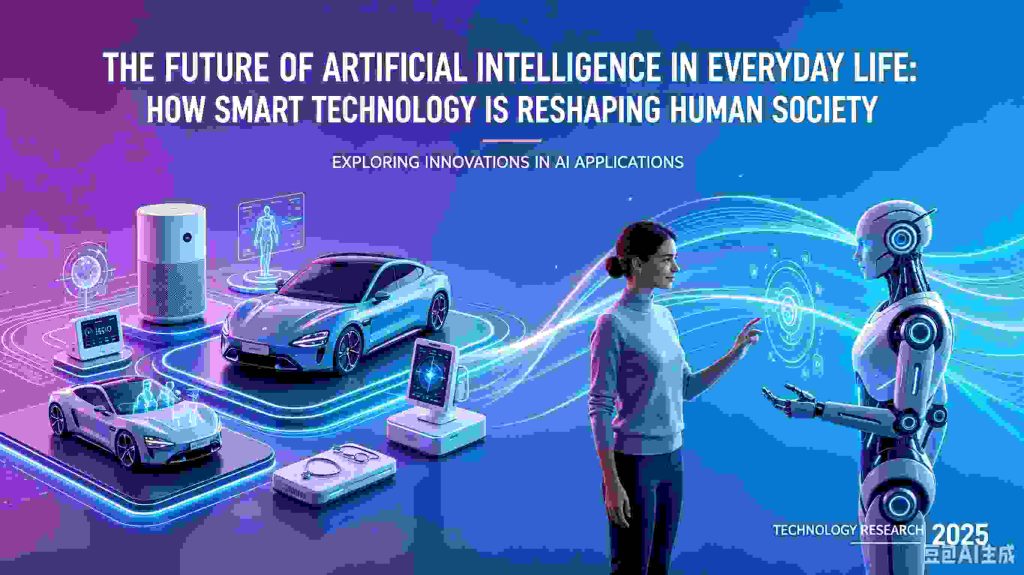
Artificial intelligence is no longer limited to research laboratories or large technology companies. Today, millions of people interact with AI-powered applications every day without even realizing it. Search engines use intelligent ranking systems to provide relevant information, streaming services recommend movies based on viewing habits, online stores predict purchasing preferences, and navigation apps calculate the fastest routes using real-time traffic analysis. These conveniences have become so common that many users rarely stop to consider the sophisticated algorithms operating behind the scenes. Machine learning models continuously improve by analyzing enormous volumes of data, allowing digital services to become more accurate and personalized over time. As AI continues learning from user interactions, it gradually becomes better at anticipating needs, reducing repetitive tasks, and making technology feel more natural and intuitive for people of all ages.
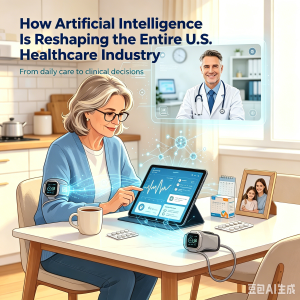
Healthcare represents one of the most promising areas for artificial intelligence. Modern AI systems can analyze medical images, identify patterns that may indicate disease, and assist physicians in making faster and more accurate diagnoses. Researchers are developing algorithms capable of detecting certain cancers, heart conditions, and neurological disorders at earlier stages than traditional screening methods. AI also supports drug discovery by analyzing molecular structures and predicting how different compounds may interact with human biology, significantly reducing research time and costs. Personalized medicine is another rapidly growing field where AI helps doctors tailor treatments based on a patient’s genetics, lifestyle, and medical history. While human expertise remains essential, artificial intelligence increasingly serves as a powerful decision-support tool that enhances medical outcomes and expands access to quality healthcare worldwide.
Education is also experiencing a significant transformation through artificial intelligence. Adaptive learning platforms can evaluate individual student performance and automatically adjust lessons to match each learner’s strengths and weaknesses. Instead of following a one-size-fits-all curriculum, students receive customized educational experiences that improve engagement and knowledge retention. AI-powered tutors are available around the clock, providing explanations, quizzes, and instant feedback whenever learners need assistance. Teachers also benefit from automation that reduces administrative workloads, allowing them to spend more time mentoring students and developing creative lesson plans. As educational institutions continue embracing digital technologies, artificial intelligence has the potential to make learning more accessible, affordable, and personalized for students regardless of their geographic location or socioeconomic background.
The workplace is undergoing one of the largest transformations driven by artificial intelligence. Many repetitive and predictable tasks can now be automated, enabling employees to focus on more creative, strategic, and interpersonal responsibilities. AI-powered software assists businesses with customer service, financial forecasting, inventory management, cybersecurity monitoring, and data analysis. Rather than replacing every human job, many experts believe AI will reshape employment by creating new career opportunities that require collaboration between humans and intelligent machines. Workers will increasingly need skills such as critical thinking, creativity, emotional intelligence, and technological literacy to remain competitive in an AI-enhanced economy. Continuous learning and professional development will become essential as industries adapt to rapidly changing technological landscapes.
Transportation is another field where artificial intelligence is making remarkable progress. Autonomous driving technology combines cameras, sensors, radar, GPS, and machine learning algorithms to interpret complex road conditions and make driving decisions in real time. Although fully autonomous vehicles are still being refined and regulated, many modern cars already include AI-assisted safety features such as adaptive cruise control, automatic emergency braking, lane-keeping assistance, and driver fatigue monitoring. AI also improves logistics by optimizing delivery routes, predicting maintenance requirements, and reducing fuel consumption for commercial transportation fleets. As smart infrastructure develops alongside intelligent vehicles, future transportation systems may become safer, more efficient, and environmentally sustainable, benefiting both urban and rural communities around the world.
Despite its tremendous advantages, artificial intelligence also introduces important ethical and social challenges. Questions surrounding privacy, algorithmic bias, data security, employment displacement, and accountability have become increasingly significant as AI systems gain greater influence over everyday decisions. Algorithms trained on biased datasets may unintentionally produce unfair outcomes in areas such as hiring, lending, healthcare, or criminal justice. Governments, technology companies, researchers, and international organizations are actively discussing regulations and ethical guidelines to ensure AI is developed responsibly. Transparency, explainability, fairness, and human oversight are widely recognized as essential principles that should guide future AI innovation. Building public trust will require ongoing collaboration between policymakers, scientists, businesses, and citizens.
Looking ahead, artificial intelligence is expected to become even more deeply integrated into human society over the coming decades. Advances in robotics, natural language processing, computer vision, and generative AI will continue expanding the range of tasks intelligent systems can perform. Smart homes may anticipate residents’ needs, healthcare systems may predict illnesses before symptoms appear, scientific discoveries may accelerate through AI-assisted research, and environmental monitoring may become more accurate through intelligent data analysis. However, the future of AI will ultimately depend on how responsibly humanity chooses to develop and apply these technologies. By balancing innovation with ethical considerations, investing in education, and encouraging international cooperation, society can harness artificial intelligence as a force that enhances human well-being, drives scientific progress, and creates opportunities for future generations rather than simply replacing existing ways of life.