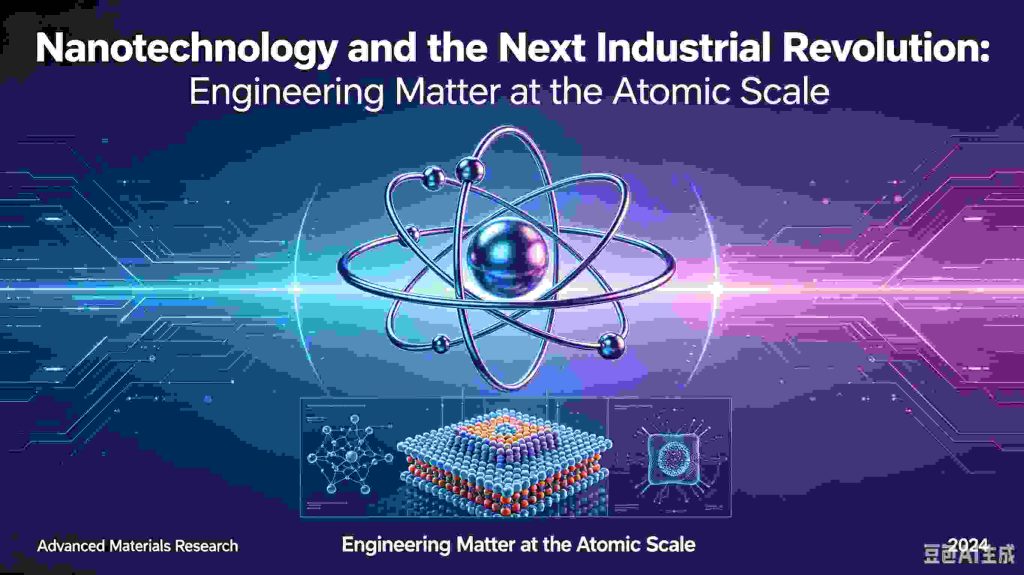
At the core of nanotechnology is the ability to manipulate individual atoms and molecules to create structures with specific properties. Materials at the nanoscale often behave differently due to quantum effects and increased surface area relative to volume. For example, gold nanoparticles can appear red or purple instead of metallic yellow, and carbon in nanostructures such as graphene exhibits extraordinary strength and electrical conductivity. Scientists use a variety of techniques to work at this scale, including electron microscopy, atomic force microscopy, and advanced chemical synthesis methods. These tools allow researchers to observe and control matter with remarkable precision, opening the door to the design of entirely new classes of materials with tailored properties for specific applications.
One of the most promising applications of nanotechnology is in the field of medicine, often referred to as nanomedicine. Nanoparticles can be engineered to deliver drugs directly to targeted cells in the body, improving treatment effectiveness while minimizing side effects. This is particularly important in cancer therapy, where traditional treatments such as chemotherapy can damage healthy tissue as well as cancerous cells. Nanoparticles can be designed to recognize and bind specifically to tumor cells, releasing therapeutic agents only where they are needed. In addition, nanoscale diagnostic tools can detect diseases at much earlier stages by identifying molecular markers in blood or tissue samples. These advances are contributing to the development of more precise, personalized, and less invasive medical treatments.
Nanotechnology is also playing a transformative role in electronics and computing. As traditional semiconductor technology approaches physical limits in terms of size and performance, nanoscale materials offer new possibilities for miniaturization and efficiency. Components such as transistors, sensors, and memory devices are being developed at increasingly smaller scales, enabling faster and more powerful computing systems. Graphene and carbon nanotubes, for example, are being studied for their potential use in next-generation electronic devices due to their exceptional electrical and thermal properties. Nanoscale engineering may also contribute to the development of quantum computing hardware, where precise control of individual particles is essential for system performance.
In the energy sector, nanotechnology is helping improve the efficiency and sustainability of power generation and storage systems. Nanostructured materials are being used to enhance the performance of solar cells by increasing light absorption and conversion efficiency. Battery technology also benefits from nanomaterials that improve energy density, charging speed, and lifespan. For instance, nanostructured electrodes can increase the surface area available for electrochemical reactions, leading to more efficient energy storage. Additionally, nanotechnology is being explored for applications in hydrogen production, fuel cells, and energy-efficient lighting systems. These innovations are essential for supporting the global transition toward cleaner and more sustainable energy sources.
Environmental applications of nanotechnology are also gaining importance as scientists seek new ways to address pollution and resource management challenges. Nanomaterials can be used to filter contaminants from water, capture pollutants from air, and break down hazardous chemicals into less harmful substances. Nanoscale sensors are capable of detecting extremely low concentrations of environmental toxins, enabling early warning systems for pollution events. In agriculture, nanotechnology is being used to develop smart fertilizers and pesticides that release nutrients more efficiently and reduce environmental impact. These technologies contribute to more sustainable resource use and help mitigate the effects of human activity on natural ecosystems.
Despite its many advantages, nanotechnology also raises important safety, ethical, and regulatory concerns. Because nanoparticles are extremely small, they can interact with biological systems in ways that are not yet fully understood. There are concerns about potential toxicity, environmental accumulation, and long-term health effects of engineered nanomaterials. As a result, researchers are actively studying nanotoxicology to assess risks and develop safe design principles. Ethical questions also arise regarding privacy and surveillance, as nanoscale sensors could potentially be used for monitoring purposes without detection. Governments and international organizations are working to establish guidelines and regulations to ensure that nanotechnology is developed responsibly and safely.
The future of nanotechnology is expected to involve even greater integration with other advanced scientific fields such as biotechnology, artificial intelligence, and materials science. This convergence could lead to breakthroughs such as smart materials that respond to environmental changes, self-healing structures, and highly efficient molecular machines. In medicine, nanorobots could one day perform targeted surgeries or deliver drugs with cellular-level precision. In manufacturing, nanoscale assembly techniques could enable the creation of materials and devices with unprecedented accuracy and complexity. While many of these applications remain in the experimental stage, the pace of research suggests that nanotechnology will continue to expand rapidly in the coming decades.
Nanotechnology represents a fundamental shift in how humans understand and manipulate the physical world. By working at the scale of atoms and molecules, scientists are unlocking new possibilities that extend far beyond traditional engineering limits. Its applications span nearly every major scientific and industrial field, making it a key driver of future innovation. As research progresses, nanotechnology is likely to play a central role in shaping the next industrial revolution, transforming medicine, computing, energy, and environmental management. The ability to engineer matter at the smallest scales offers not only technological advancement but also a deeper understanding of the building blocks of nature itself, positioning nanotechnology as one of the most powerful scientific tools of the twenty-first century.